MinuteRead
21 min
Book summary
by Adam Minter
Premium summary · Opens in the app · 30 min read
Every week, millions of people drag bins to the curb, drop bottles into blue containers, or haul broken electronics to collection centers. They feel a small sense of accomplishment. They have done their part. The recycling is handled. The planet is slightly better off.
**Author:** Adam Minter
**Estimated Reading Time:** 45 minutes
**What You'll Learn:**
- How the global recycling industry became a $500 billion economic force - Why your trash travels thousands of miles before becoming something new - The hidden human stories behind the world's scrap trade - What China's recycling revolution means for the future of waste - Why recycling is far more complex than sorting your cans and bottles
**Who This Book Is For:**
Anyone who has ever wondered what happens to their trash after the truck pulls away. Anyone curious about global trade, environmental economics, or the unseen industries that power modern life. Anyone who wants to understand why recycling matters in ways that go far beyond environmental virtue.
Every week, millions of people drag bins to the curb, drop bottles into blue containers, or haul broken electronics to collection centers. They feel a small sense of accomplishment. They have done their part. The recycling is handled. The planet is slightly better off. Few of them ever ask what happens next. The answer is extraordinary. That empty soda can might travel across an ocean. That broken laptop could end up in a dusty Chinese village where workers dismantle it by hand. That pile of old newspapers might become the cardboard box that delivers your next online purchase. The global recycling industry is one of the largest economic systems on Earth, yet it remains almost entirely invisible to the people who depend on it most. Adam Minter spent nearly two decades documenting this hidden world. He grew up in a family scrap business in Minneapolis, where his grandmother Rose ran a junkyard and taught him that there is no such thing as worthless material, only material whose value has not yet been recognized. That early education shaped his understanding of waste in ways that would later surprise him as a journalist covering China's industrial transformation. What Minter discovered is that recycling is not primarily an environmental activity. It is an economic one. The industry exists because someone, somewhere, can make money from what you throw away. The environmental benefits are real and significant, but they are secondary to the fundamental logic of the trade. Scrap metal dealers do not buy old copper wire because they want to save the planet. They buy it because copper is valuable, and someone in China or India or Turkey needs it to manufacture new products. This distinction matters because it explains why recycling works when it works, and why it fails when it fails. When commodity prices rise, recycling flourishes. When prices collapse, recycling programs struggle. When China decides it no longer wants the world's plastic waste, entire municipal recycling systems face crisis. The…
Continue reading in the MinuteRead app
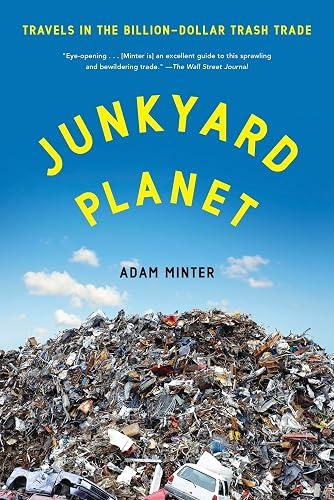
Get the complete 30-minute summary of Junkyard Planet
Get the complete summary in the appRecycling is a $500 billion global industry, not just a household chore.
The industry is driven by economics, not environmental idealism.
Scrap metal is the foundation of the recycling industry because it can be recycled indefinitely.
China's manufacturing boom created massive demand for recycled materials, reshaping global trade.
Most plastic is not recycled, even when placed in recycling bins.
The informal e-waste sector provides livelihoods but causes serious health and environmental problems.
"Junkyard Planet" is a strong fit if you want practical ideas around environment, business, economics, especially themes like recycling is a $500 billion global industry, not just a household chore; the industry is driven by economics, not environmental idealism. The MinuteRead summary distills these concepts into a focused read, whether you're deciding whether to buy the book or applying its lessons at work.
Motivated to help readers with the global recycling industry turns over as much as $500 billion annually—roughly equal to the GDP of, Adam Minter wrote “Junkyard Planet” to package those ideas for a fast, focused read. In “Junkyard Planet”, Adam Minter focuses on the global recycling industry turns over as much as $500 billion annually—roughly equal to the GDP of. Through “Junkyard Planet”, Adam Minter distills the core ideas on environment into lessons readers can absorb in a single short sitti…
Continue Reading
Access the complete 30-minute summary and thousands more nonfiction books in the MinuteRead app.

Continue reading the complete summary in the MinuteRead app.