MinuteRead
30 min
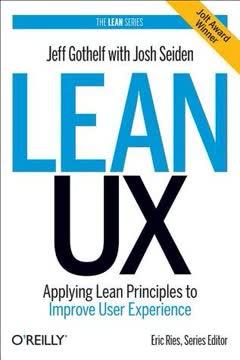
Book summary
by Jeff Gothelf
Premium summary · Opens in the app · 30 min read
Every product team wants the same thing. They want to build something people love. They want to ship it quickly. They want to avoid wasting months on features nobody uses. And yet, despite these shared intentions, most teams struggle to achieve any of them.
**Author:** Jeff Gothelf
**Estimated Reading Time:** 45 minutes
**What You'll Learn:**
- Why traditional UX documentation fails modern product teams - How to shift from designing deliverables to driving outcomes - How to run experiments that validate ideas before you build them - How to bring designers, developers, and product managers into one collaborative process - How to integrate design into agile development without friction - How to build a culture of continuous learning in your organization
**Who This Book Is For:**
Product designers, UX practitioners, product managers, developers, startup founders, and anyone who wants to build better products faster. If you have ever felt that your design process produces documents instead of progress, this book will change how you work.
Every product team wants the same thing. They want to build something people love. They want to ship it quickly. They want to avoid wasting months on features nobody uses. And yet, despite these shared intentions, most teams struggle to achieve any of them. The problem is not a lack of talent. The problem is not a lack of effort. The problem is a process that was built for a different era. Traditional user experience design emerged in a world where software shipped in boxes. You could not update a product after it left the shelf. Every decision had to be made upfront, documented exhaustively, and approved by layers of stakeholders before a single line of code was written. The deliverable was the product. The specification document was the contract. The wireframe was the blueprint. And the designer's job was to produce these artifacts with enough detail and precision that developers could build exactly what was specified, months later, without asking questions. This approach made sense when change was expensive. But change is no longer expensive. Software ships continuously. Products update weekly, daily, sometimes hourly. The cost of changing a digital product has dropped so dramatically that the old assumptions no longer hold. Yet most teams still operate as if they do. The result is a familiar pattern of waste. Designers spend weeks producing detailed specifications. Developers build to those specifications. The product launches. Users behave differently than expected. The team discovers that their assumptions were wrong. And all that documentation, all that upfront planning, all that careful specification work, becomes irrelevant. Jeff Gothelf wrote Lean UX to address this mismatch. His central argument is simple but profound: the design process should optimize for learning, not for documentation. The goal is not to produce a perfect specification. The goal is to discover, as quickly and cheaply as possible, what actually works for users and for the business. Lean UX brings together three powerful movements that emerged in the early…
Continue reading in the MinuteRead app
Get the complete 30-minute summary of Lean UX
Get the complete summary in the appOptimize for outcomes, not outputs. Measure success by the impact you create, not the documents you produce.
Treat every idea as a hypothesis. Write it down, make it specific, and test it before you invest in it.
Build the smallest thing that will generate learning. An MVP is an experiment, not a product.
Collaborate across disciplines. Bring designers, developers, and product managers together into a single team.
Engage with users every week. Continuous discovery keeps you connected to reality.
Test before you build. Use prototypes, landing pages, and conversations to validate ideas cheaply.
"Lean UX" is a strong fit if you want practical ideas around design, business, technology, especially themes like optimize for outcomes, not outputs. measure success by the impact you create, not the documents you produce; treat every idea as a hypothesis. write it down, make it specific, and test it before you invest in it. The MinuteRead summary distills these concepts into a focused read, whether you're deciding whether to buy the book or applying its lessons at work.
Jeff Gothelf is a prominent figure in the field of user experience design and product development. He is best known for his work on Lean UX methodologies, which combine principles from lean startup, design thinking, and agile development. Gothelf has extensive experience working with both startups and large organizations, helping them improve their product design processes. He is a sought-after speaker, workshop facilitator, and author, having written multiple books on UX design and lean methodo…
View all summaries by Jeff GothelfContinue Reading
Access the complete 30-minute summary and thousands more nonfiction books in the MinuteRead app.

Continue reading the complete summary in the MinuteRead app.