MinuteRead
30 min
Book summary
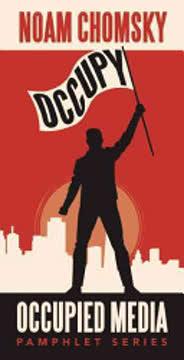
by Noam Chomsky
Premium summary · Opens in the app · 30 min read
Something remarkable happened in the fall of 2011. A small group of people gathered in Zuccotti Park, a privately owned public space in Lower Manhattan, and refused to leave. They had no clear demands, no designated leaders, no organizational structure that political commentators could recognize. Many observers dismissed them as naive, disorganized, and destined to fail.
**Author:** Noam Chomsky **Estimated Reading Time:** 45 minutes
**What You'll Learn**
How a decentralized protest movement transformed American political discourse, why the concentration of wealth threatens democracy itself, and what ordinary people can actually do to build a more just economy. You will learn about worker-owned enterprises, the history of successful grassroots movements, the mechanics of political repression, and the deep connections between economic inequality and environmental destruction.
**Who This Book Is For**
Anyone who sensed that Occupy Wall Street mattered but could not quite articulate why. Anyone frustrated by a political system that seems to serve the wealthy. Anyone who wants to understand how social movements actually create change, and anyone looking for concrete alternatives to an economic order that has failed the vast majority of people.
Something remarkable happened in the fall of 2011. A small group of people gathered in Zuccotti Park, a privately owned public space in Lower Manhattan, and refused to leave. They had no clear demands, no designated leaders, no organizational structure that political commentators could recognize. Many observers dismissed them as naive, disorganized, and destined to fail. Within weeks, the Occupy movement had spread to hundreds of cities across the United States and around the world. More importantly, it had changed the national conversation. Before Occupy, discussions of economic inequality were largely confined to academic journals and left-wing magazines. After Occupy, the phrase "the one percent" became part of everyday language. Politicians who had spent decades avoiding the subject suddenly found themselves forced to address it. This was not an accident. The movement tapped into something real, something millions of Americans had been feeling for years but had not been able to name. The sense that the economic game was rigged. The sense that hard work no longer guaranteed a decent life. The sense that something fundamental had gone wrong with American capitalism. Noam Chomsky, one of the most incisive political thinkers of our time, recognized the significance of Occupy from the beginning. In this book, drawn from his writings and interviews during and after the movement's peak, he explains why Occupy mattered, what it accomplished, and what must come next. The problem Occupy addressed is not new. Since the 1970s, the United States has undergone a dramatic economic transformation. The broadly shared prosperity of the postwar decades has given way to staggering inequality. Wages for most workers have stagnated while incomes at the very top have skyrocketed. The financial sector has grown enormously while manufacturing has declined. Political power has followed economic power, creating a system in which the wealthy can effectively purchase legislation that serves their interests. This is not how democracy is supposed to work. And yet for decades, it…
Continue reading in the MinuteRead app
Get the complete 30-minute summary of Occupy
Get the complete summary in the appInequality is a policy choice, not a natural outcome. Different choices can reverse it.
The one percent framework changed American political discourse by making structural inequality visible.
Economic inequality produces political inequality. The wealthy buy the policies that make them wealthier.
Worker-owned enterprises are a real, functioning alternative to shareholder capitalism.
Every major social advance was won by grassroots movements, not granted by elites.
Repression is normal and predictable. Prepare for it rather than being surprised by it.
"Occupy" is a strong fit if you want practical ideas around politics, philosophy, history, especially themes like inequality is a policy choice, not a natural outcome. different choices can reverse it; the one percent framework changed american political discourse by making structural inequality visible. The MinuteRead summary distills these concepts into a focused read, whether you're deciding whether to buy the book or applying its lessons at work.
Avram Noam Chomsky is a renowned American linguist, philosopher, and political activist. He is credited with developing generative grammar, a significant contribution to linguistics in the 20th century. Chomsky's work sparked the cognitive revolution in psychology and influenced the philosophy of language and mind. He is also known for establishing the Chomsky hierarchy in formal language theory. Since the 1960s, Chomsky has gained prominence for his media criticism and political activism, parti…
View all summaries by Noam ChomskyContinue Reading
Access the complete 30-minute summary and thousands more nonfiction books in the MinuteRead app.

Continue reading the complete summary in the MinuteRead app.