MinuteRead
30 min
Book summary
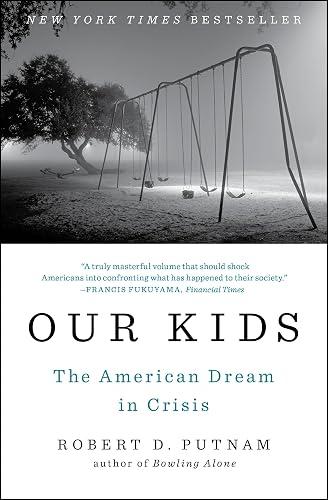
by Robert D. Putnam
Premium summary · Opens in the app · 30 min read
Robert Putnam grew up in Port Clinton, Ohio, a small town on the shores of Lake Erie. He graduated from high school in 1959. In that year, his classmates came from every corner of the community. Some had parents who worked in the limestone quarries. Some had parents who owned businesses. Some had parents who worked in the factories that lined the lakefront. Some had parents who were doctors and lawyers.
**Author:** Robert D. Putnam
**Estimated Reading Time:** 45 minutes
**What You'll Learn:**
- Why the American Dream is disappearing for millions of children - How the opportunity gap between rich and poor kids has widened dramatically - What happens when communities lose their social fabric - Why family structure, schooling, and neighborhoods matter more than ever - What individuals and communities can do to restore opportunity
**Who This Book Is For:**
This book is for anyone who believes that every child deserves a fair chance. It is for parents wondering why the world feels different from the one they grew up in. It is for teachers, coaches, pastors, and community leaders who see struggling kids every day. It is for policymakers seeking to understand the roots of inequality. Most of all, it is for Americans who sense that something essential has been lost and want to understand what happened and what can be done.
Robert Putnam grew up in Port Clinton, Ohio, a small town on the shores of Lake Erie. He graduated from high school in 1959. In that year, his classmates came from every corner of the community. Some had parents who worked in the limestone quarries. Some had parents who owned businesses. Some had parents who worked in the factories that lined the lakefront. Some had parents who were doctors and lawyers. What mattered most, Putnam recalls, was not where you came from but where you were going. The kids from the poor side of town played alongside the kids from the wealthy side. They dated each other. They went to church together. They competed on the same sports teams. When they graduated, almost all of them found a path forward. Some went to college. Some got good union jobs in the factories. Some joined the military. A few struggled, but most found their footing. The community supported them all. Teachers pushed every student. Neighbors looked out for each other's children. The local economy provided opportunities for anyone willing to work hard. Social class mattered, but it did not determine your destiny. If you had talent and drive, Port Clinton would help you succeed. Putnam calls his classmates "the last of the lucky generations." When he returned to Port Clinton decades later, he found a very different town. The factories had closed. The good union jobs had disappeared. The community had split into two worlds. The children of college-educated parents lived in comfortable homes, attended good schools, participated in extracurricular activities, and expected to go to college. The children of less-educated parents lived in struggling households, attended underfunded schools, spent their afternoons alone, and had little hope for the future. This pattern is not unique to Port…
Continue reading in the MinuteRead app
Get the complete 30-minute summary of Our Kids
Get the complete summary in the appThe opportunity gap between rich and poor children has widened dramatically over the past several decades.
The American Dream is slipping away for millions of children.
Family structure has diverged by class, with college-educated parents more likely to marry and stay married.
Parenting styles have diverged, with wealthy parents practicing "concerted cultivation" and poor parents practicing "nat
Schools have become engines of inequality, reinforcing rather than reducing the opportunity gap.
Community life has fragmented along class lines, leaving poor children without the social capital they need.
"Our Kids" is a strong fit if you want practical ideas around sociology, self help, personal development, especially themes like the opportunity gap between rich and poor children has widened dramatically over the past several decades; the american dream is slipping away for millions of children. The MinuteRead summary distills these concepts into a focused read, whether you're deciding whether to buy the book or applying its lessons at work.
Motivated to help readers with yet, Robert D. Putnam wrote “Our Kids” to package those ideas for a fast, focused read. In “Our Kids”, Robert D. Putnam focuses on yet. Through “Our Kids”, Robert D. Putnam distills the core ideas on sociology into lessons readers can absorb in a single short sitting. Readers turn to this work when they want Robert D. Putnam's perspective on the subject without working through the entire original volume. Robert David Putnam (born January 9, 1941) is an American pol…
Continue Reading
Access the complete 30-minute summary and thousands more nonfiction books in the MinuteRead app.

Continue reading the complete summary in the MinuteRead app.