MinuteRead
30 min
Every so often in history, the ground beneath society shifts so profoundly that the maps we use to navigate reality become obsolete. The old landmarks remain visible, but they no longer guide us. The old routes lead nowhere. The old compasses spin without settling. We are living through such a moment now.
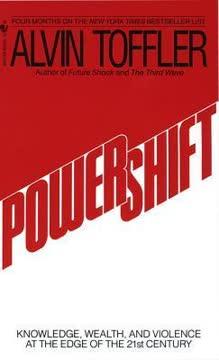
**Author:** Alvin Toffler
**Estimated Reading Time:** 45 minutes
**What You'll Learn:**
- Why knowledge has replaced violence and wealth as the ultimate source of power - How the super-symbolic economy is transforming the way wealth is created - What information wars mean for businesses, governments, and individuals - Why traditional bureaucracies are collapsing and what is replacing them - How democracy itself is fragmenting into a new mosaic form - What all of this means for your career, your organization, and your life
**Who This Book Is For:**
This book is for anyone who senses that the old rules no longer apply. It is for business leaders watching their industries transform overnight, for professionals wondering why their expertise feels simultaneously more valuable and more precarious, for citizens confused by the fragmentation of politics, and for curious minds who want to understand the deep forces reshaping modern life. If you have ever felt that power is shifting in ways you cannot quite name, this book will give you the language and the framework to see clearly.
Every so often in history, the ground beneath society shifts so profoundly that the maps we use to navigate reality become obsolete. The old landmarks remain visible, but they no longer guide us. The old routes lead nowhere. The old compasses spin without settling. We are living through such a moment now. Alvin Toffler wrote Powershift at the end of the 1980s, but the book reads with uncanny precision today because he identified forces that were only beginning to accelerate. He saw that the industrial order, which had structured life for two centuries, was cracking apart. He saw that the factories, the corporations, the governments, and the media systems built for mass society were losing their grip. And he saw what was replacing them: a new civilization organized around knowledge. The central claim of Powershift is deceptively simple. Throughout history, power has flowed from three sources: violence, wealth, and knowledge. Every society uses all three, but each era elevates one above the others. The agricultural age was dominated by violence. The industrial age was dominated by wealth. The emerging age, Toffler argued, is dominated by knowledge. This shift is not academic. It changes everything about how we live, work, compete, and govern ourselves. When knowledge becomes the primary source of power, the nature of power itself changes. Unlike land or factories or armies, knowledge cannot be exhausted by use. It can be shared without being diminished. It can be combined and recombined endlessly. It is the most democratic source of power ever known, and also the most disruptive. Toffler wrote this book to help readers understand the transition. He was not interested in predicting the…
Continue reading in the MinuteRead app
Get the complete 30-minute summary of Powershift
Get the complete summary in the appPower comes from three sources: violence, wealth, and knowledge. Knowledge is now the most important.
Knowledge is different from violence and wealth. It is non-depleting, non-exclusive, and generative.
The economy is shifting from tangible to intangible assets. Knowledge is the primary source of value.
Information wars are reshaping business and politics. Control over information is control over power.
Bureaucracy is obsolete. Flexible, networked organizations are replacing it.
Power is decentralizing. Small actors can now have outsized impact.
"Powershift" is a strong fit if you want practical ideas around politics, business, economics, especially themes like power comes from three sources: violence, wealth, and knowledge. knowledge is now the most important; knowledge is different from violence and wealth. it is non-depleting, non-exclusive, and generative. The MinuteRead summary distills these concepts into a focused read, whether you're deciding whether to buy the book or applying its lessons at work.
Alvin Toffler was an influential American writer and futurist known for his analysis of technological and social change. His work focused on the digital revolution, communications, and technological singularity. Toffler's background as an associate editor at Fortune magazine informed his early writings on technology's impact, including information overload. He gained significant recognition in business and academic circles, with Accenture ranking him as the third most influential voice among bus…
View all summaries by Alvin TofflerContinue Reading
Access the complete 30-minute summary and thousands more nonfiction books in the MinuteRead app.

Continue reading the complete summary in the MinuteRead app.