MinuteRead
30 min
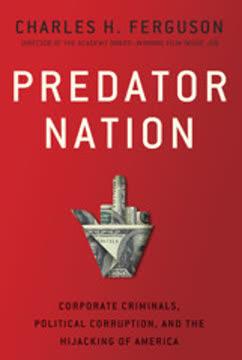
Most Americans remember the 2008 financial crisis as a confusing disaster that arrived without warning. Banks collapsed. The stock market plummeted. Millions lost their homes. The government spent trillions on bailouts. And then, somehow, almost nobody went to prison.
**Author:** Charles Ferguson
**Estimated Reading Time:** 2 hours 15 minutes
**What You'll Learn**
The true story of how America's financial system was captured by a criminal oligarchy. You will understand the specific mechanisms of fraud that caused the 2008 crisis, why almost nobody went to prison, how both political parties became complicit, and why the same conditions that produced the collapse remain largely in place today. This book explains the structural corruption that transformed American capitalism into a system that enriches the few at the expense of the many.
**Who This Book Is For**
Anyone who suspects the 2008 financial crisis was not an accident but a crime. Anyone frustrated by the absence of meaningful prosecutions. Anyone who wants to understand the precise relationship between academic economics, political power, and Wall Street money. This book is for citizens who sense something has gone deeply wrong with American democracy and want to understand exactly what happened and what must change.
Most Americans remember the 2008 financial crisis as a confusing disaster that arrived without warning. Banks collapsed. The stock market plummeted. Millions lost their homes. The government spent trillions on bailouts. And then, somehow, almost nobody went to prison. What most people still do not understand is that the crisis was not an accident. It was not a failure of complex systems that nobody could have predicted. It was, in Charles Ferguson's direct assessment, the crime of the century. A crime carried out over decades by people who knew exactly what they were doing. A crime that was enabled, covered up, and ultimately protected by the very institutions that were supposed to prevent it. This book exists because the official story about the financial crisis is a lie. The lie says that the collapse resulted from unforeseeable market forces, a few bad actors, and some regrettable but legal risk-taking. The truth is far darker. The crisis was the predictable outcome of a deliberate campaign to dismantle financial regulation, corrupt academic economics, capture the political system, and enrich a small elite through systematic fraud. The problem this book addresses is not merely historical. The same financial institutions that caused the crisis are larger now than they were in 2008. The same political system that refused to prosecute them remains in place. The same academic economists who provided intellectual cover for deregulation continue to advise governments and appear on television as neutral experts. The same dynamics that produced the collapse are still operating, which means another crisis is not just possible. It is likely. Why does this topic matter? Because the financial crisis was not a Wall Street problem. It was an American problem that became a global catastrophe. Tens of millions of…
Continue reading in the MinuteRead app
Get the complete 30-minute summary of Predator Nation
Get the complete summary in the appThe 2008 financial crisis was not an accident. It was a crime.
Deregulation was a deliberate campaign to remove legal protections so banks could engage in fraud.
Academic economists who advocated for deregulation were often paid by the financial industry.
Both political parties serve the financial elite. The differences between them on economic policy are minimal.
The failure to prosecute financial executives is evidence that the legal system has been captured.
Income inequality is the result of policies designed to enrich the financial sector at everyone else's expense.
"Predator Nation" is a strong fit if you want practical ideas around politics, economics, finance, especially themes like the 2008 financial crisis was not an accident. it was a crime; deregulation was a deliberate campaign to remove legal protections so banks could engage in fraud. The MinuteRead summary distills these concepts into a focused read, whether you're deciding whether to buy the book or applying its lessons at work.
Charles H. Ferguson is an accomplished filmmaker, entrepreneur, and writer. He gained acclaim for his documentaries on the financial crisis and Iraq War, winning an Oscar for "Inside Job" in 2011. Ferguson has authored four books and is recognized as an expert in technology policy. His multifaceted career includes success in the software industry and involvement with prestigious organizations like the Council on Foreign Relations. Ferguson's work often focuses on exposing complex issues in finan…
View all summaries by Charles FergusonContinue Reading
Access the complete 30-minute summary and thousands more nonfiction books in the MinuteRead app.

Continue reading the complete summary in the MinuteRead app.