MinuteRead
30 min
Book summary
Premium summary · Opens in the app · 30 min read
Most books about web design focus on tools, techniques, and trends. They teach you how to create beautiful mockups, write clean code, or master the latest prototyping software. But they miss something fundamental.
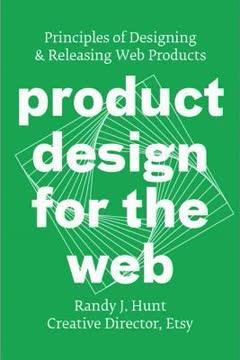
**Author:** Randy J. Hunt **Estimated Reading Time:** 48 minutes
### What You'll Learn The fundamental principles that separate successful web products from failures. How to balance user needs with business goals, why shipping early beats waiting for perfection, and how to build invisible features that create lasting user trust. You will learn a complete framework for thinking about digital product creation as an evolving craft rather than a one-time project.
### Who This Book Is For Web designers who want to think more strategically about their work. Product managers seeking to understand design decisions. Developers who want to collaborate more effectively with design teams. Anyone involved in creating digital products who senses that great design is about more than making things look good.
Most books about web design focus on tools, techniques, and trends. They teach you how to create beautiful mockups, write clean code, or master the latest prototyping software. But they miss something fundamental. The web is not a fixed medium. Unlike print design, where the final product goes to press and remains unchanged, web products exist in a state of perpetual flux. A website launched today will be different tomorrow, next week, and next year. The design is never finished. This reality creates a strange tension. Designers are trained to pursue perfection. They want to polish every pixel, refine every interaction, and deliver something beautiful and complete. But the web punishes this instinct. While you are perfecting your design, user needs shift. Competitors launch new features. Technology evolves. The market moves on. Randy J. Hunt understands this tension intimately. As creative director at Etsy, he spent years navigating the space between design quality and shipping velocity. He learned that great web product design requires a fundamentally different mindset from traditional design disciplines. It demands comfort with impermanence, a willingness to ship imperfect work, and an almost obsessive focus on what users actually need rather than what designers want to create. This book is his attempt to articulate that mindset. Hunt argues that web product design is a unique intersection of skills applied to a unique intersection of opportunities. It combines visual design, interaction design, information architecture, user research, and business strategy. But more importantly, it requires a philosophy: a set of principles for making decisions in an environment of constant change. The problem most teams face is not a lack of talent or creativity. It is a lack of clarity about what matters. They obsess over surface-level aesthetics while neglecting performance, security, and reliability. They chase clever design solutions that confuse users. They wait too long to ship, then discover they have built something nobody wants. Hunt offers a different path. His approach prioritizes function over cleverness,…
Continue reading in the MinuteRead app
Get the complete 30-minute summary of Product Design for the Web
Get the complete summary in the appDesign for the user's goals, not your portfolio.
Ship something useful early. Improve it based on feedback.
Performance, security, and reliability matter more than visual polish.
Tell a coherent story across the entire user journey.
Collaborate from the beginning, not at the end.
Talk to real users. You are not representative.
"Product Design for the Web" is a strong fit if you want practical ideas around design, business, website design, especially themes like design for the user's goals, not your portfolio; ship something useful early. improve it based on feedback. The MinuteRead summary distills these concepts into a focused read, whether you're deciding whether to buy the book or applying its lessons at work.
Randy J. Hunt is the creative director at Etsy, bringing extensive experience in graphics design, fine arts, and web front-end coding to his role. His background in these diverse fields allows him to speak confidently about design perspectives and the importance of understanding materials in web development. Hunt's career at Etsy, a smaller tech startup, has given him practical experience with pragmatic ship cycles in a more agile organization. His book draws from this experience, bridging the g…
View all summaries by Randy J. HuntContinue Reading
Access the complete 30-minute summary and thousands more nonfiction books in the MinuteRead app.

Continue reading the complete summary in the MinuteRead app.