MinuteRead
30 min
Book summary
Premium summary · Opens in the app · 30 min read
Lisa Foster, a former judge and national advocate for court reform, put it plainly: "This is truly a national crisis. This is everywhere. All fifty states."
**Author:** Tony Messenger
**Estimated Reading Time:** 45 minutes
This book reveals how the American criminal justice system has quietly rebuilt debtors' prisons across all fifty states. You will learn how traffic tickets, court fees, and minor fines trap millions of working Americans in cycles of debt, incarceration, and permanent disadvantage. You will understand how local governments became addicted to court revenue, why judges jail people simply for being poor, and how private probation companies profit from human misery. Most importantly, you will see how this system persists despite being unconstitutional and what it will take to dismantle it.
This book is for anyone who believes the justice system should not depend on the size of a person's bank account. It is for citizens who want to understand why their local courts operate the way they do. It is for policymakers, advocates, and concerned neighbors who sense something has gone deeply wrong in how America treats its poorest residents. If you have ever wondered how a simple traffic ticket can destroy a life, this book will show you the machinery behind that destruction.
Lisa Foster, a former judge and national advocate for court reform, put it plainly: "This is truly a national crisis. This is everywhere. All fifty states." She was not talking about violent crime or drug cartels. She was talking about something far more mundane and far more widespread: the systematic criminalization of poverty through court fines and fees. Every day in America, people are jailed not because they committed dangerous crimes but because they are too poor to pay a traffic ticket. They lose their driver's licenses, which means they lose their jobs, which means they fall further behind on their payments, which means they get arrested again. The cycle tightens with each turn. Tony Messenger, a Pulitzer Prize-winning journalist for the St. Louis Post-Dispatch, spent years documenting this hidden machinery of American injustice. He sat in rural courtrooms where judges ordered defendants to pay hundreds of dollars they clearly did not have. He interviewed mothers who lost custody of their children because they spent weeks in jail over unpaid fines. He traced the flow of money from the pockets of the poor into the budgets of small towns that had become dependent on court revenue to keep their lights on. What he found was not a series of isolated incidents or a few bad actors. He found a system. A system that operates in every state, in thousands of jurisdictions, affecting millions of lives. A system that persists despite clear constitutional prohibitions against excessive fines and debtors' prisons. A system that punishes poverty while calling it justice. The problem took root quietly. After the 2008 financial crisis,…
Continue reading in the MinuteRead app
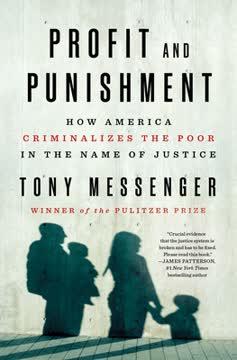
Get the complete 30-minute summary of Profit and Punishment
Get the complete summary in the appAmerica has rebuilt debtors' prisons across all fifty states, jailing people not for crimes but for inability to pay cou
A simple traffic ticket can spiral into thousands of dollars of debt, job loss, homelessness, and incarceration for peop
Court fines and fees function as a hidden, regressive tax system that places the heaviest burden on those least able to
Cash bail creates a two-tiered justice system where freedom depends on wealth, not public safety or flight risk.
Private probation companies profit from supervising poor defendants, creating incentives for extended supervision and ag
Eleven million Americans have suspended driver's licenses due to unpaid court debt, trapping them in cycles of unemploym
"Profit and Punishment" is a strong fit if you want practical ideas around politics, social justice, history, especially themes like america has rebuilt debtors' prisons across all fifty states, jailing people not for crimes but for inability to pay cou; a simple traffic ticket can spiral into thousands of dollars of debt, job loss, homelessness, and incarceration for peop. The MinuteRead summary distills these concepts into a focused read, whether you're deciding whether to buy the book or applying its lessons at work.
Tony Messenger is a Pulitzer Prize-winning journalist known for his work at the St. Louis Post-Dispatch. He was a finalist for the 2015 Pulitzer Prize for Commentary for his editorials on Ferguson, Missouri, and won the 2019 Pulitzer Prize for Commentary for his columns exposing injustices in Missouri's rural court system. Messenger's reporting focuses on how the criminal justice system affects impoverished communities, particularly through court fees and fines. His work has led to policy change…
View all summaries by Tony MessengerContinue Reading
Access the complete 30-minute summary and thousands more nonfiction books in the MinuteRead app.

Continue reading the complete summary in the MinuteRead app.