MinuteRead
30 min
Book summary
by Steve Krug
Premium summary · Opens in the app · 30 min read
Steve Krug has spent decades watching people struggle with websites. He has sat in countless observation rooms, watching countless users click the wrong buttons, miss obvious navigation, and abandon tasks in frustration. Through all of this, he has arrived at a simple conviction: most usability problems are not mysterious. They are hiding in plain sight. The problem is that the people who build products are too close to them to see what is obvious to a first-time user.
**Author:** Steve Krug
**Estimated Reading Time:** 45 minutes
**What You'll Learn:**
- Why usability testing is the single most valuable practice for anyone who builds websites or applications - How to run effective usability tests with minimal resources, time, and expertise - Why testing with just three users can transform your product - How to involve your entire team in the testing process and turn insights into action - Practical techniques for facilitating tests, analyzing results, and fixing problems efficiently
**Who This Book Is For:**
This book is for anyone involved in creating digital products. Whether you are a designer, developer, product manager, content strategist, or business owner, if you have ever wondered whether people can actually use what you are building, this book will show you how to find out. You do not need a research background, a large budget, or specialized equipment. You just need a willingness to watch people use your product and the discipline to act on what you see.
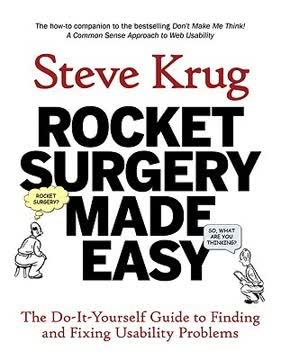
Steve Krug has spent decades watching people struggle with websites. He has sat in countless observation rooms, watching countless users click the wrong buttons, miss obvious navigation, and abandon tasks in frustration. Through all of this, he has arrived at a simple conviction: most usability problems are not mysterious. They are hiding in plain sight. The problem is that the people who build products are too close to them to see what is obvious to a first-time user. Krug's first book, "Don't Make Me Think," became a classic because it explained the principles of intuitive web design in plain language. But after years of teaching those principles, Krug noticed something troubling. People would read his book, nod along with every chapter, and then go back to their jobs and continue making the same mistakes. They understood the theory but never saw their own products through the eyes of a real user. The missing piece was testing. Not formal, expensive, laboratory-based usability testing with clipboards and statistical analysis. Krug means something far simpler: sitting down with a real person, asking them to use your product, and watching what happens. This kind of testing is the fastest way to discover what is broken, what is confusing, and what needs to change. The problem is that most people believe usability testing is complicated. They imagine it requires a dedicated lab, expensive equipment, professional recruiters, and weeks of preparation. They think it is something only large companies with research departments can afford. This belief has prevented countless teams from ever testing their products, and their users have paid the price. Krug wrote "Rocket Surgery Made Easy" to demolish this misconception. The title itself is a joke. Rocket surgery is not…
Continue reading in the MinuteRead app
Get the complete 30-minute summary of Rocket Surgery Made Easy
Get the complete summary in the appTest with one user before testing with none. The gap between zero testing and some testing is enormous.
Test early and often. Start with rough prototypes and test once a month, every month.
Three users per round is enough. You will find most of the serious problems without overwhelming your team.
Recruit loosely. Almost anyone can provide useful usability feedback. Do not let recruiting become a barrier.
Write tasks that describe realistic goals without using interface language. Avoid leading participants.
Do not help participants during tests. The struggle is the data.
"Rocket Surgery Made Easy" is a strong fit if you want practical ideas around design, business, usability, especially themes like test with one user before testing with none. the gap between zero testing and some testing is enormous; test early and often. start with rough prototypes and test once a month, every month. The MinuteRead summary distills these concepts into a focused read, whether you're deciding whether to buy the book or applying its lessons at work.
Steve Krug is a renowned usability expert and author. His best-selling book, "Don't Make Me Think," has sold over 600,000 copies and is considered a classic in web usability. Krug's second book, "Rocket Surgery Made Easy," focuses on do-it-yourself usability testing. With over 20 years of experience as a usability consultant, Krug has worked with major clients like Apple, Bloomberg.com, and NPR. He runs a consulting firm called Advanced Common Sense and spends his time writing, teaching usabilit…
View all summaries by Steve KrugContinue Reading
Access the complete 30-minute summary and thousands more nonfiction books in the MinuteRead app.

Continue reading the complete summary in the MinuteRead app.