MinuteRead
30 min
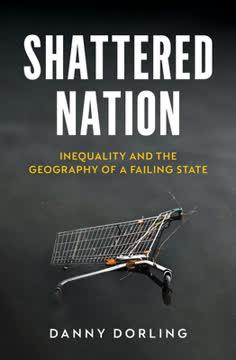
There is a particular kind of national decline that happens quietly. It does not announce itself with dramatic collapse. There is no single catastrophic event, no obvious moment when everything falls apart. Instead, the fabric of shared life frays gradually. The bonds that hold people together loosen. The assumption that we are all in this together, that our fates are connected, slowly evaporates.
**Author:** Danny Dorling **Estimated Reading Time:** 42 minutes
Why Britain, once among Europe's most equal societies, became its most unequal. How that transformation broke the bonds between people, regions, and generations. What the rise of food banks, precarious work, unaffordable housing, and political bitterness reveals about a country losing its sense of shared destiny. And what it would actually take to put the pieces back together.
Anyone who has looked at modern Britain and felt something is profoundly wrong but struggled to articulate exactly what. Readers who want to understand the forces reshaping their communities, their workplaces, and their prospects. Citizens who suspect the country is drifting toward something darker and want to know why, and whether there is a way back.
There is a particular kind of national decline that happens quietly. It does not announce itself with dramatic collapse. There is no single catastrophic event, no obvious moment when everything falls apart. Instead, the fabric of shared life frays gradually. The bonds that hold people together loosen. The assumption that we are all in this together, that our fates are connected, slowly evaporates. This is what has happened to Britain. Danny Dorling's *Shattered Nation* is an attempt to document and explain this quiet unraveling. It is a book about inequality, but not only about money. It is about how a country that once prided itself on fairness, on the idea that everyone deserved a decent chance, became a place where the circumstances of your birth increasingly determine the course of your life. The statistics are stark. Britain is now the most unequal country in Europe when it comes to income. The richest 1 percent receive 13 percent of all income and hold 21 percent of all wealth. But behind these numbers lies something more profound: a society where different groups live increasingly separate lives, where the wealthy and the poor inhabit different worlds, where the very idea of a common national experience has broken down. This was not always the case. In the decades following the Second World War, Britain was among the more equal societies in Europe. The welfare state, built on the foundations of the Beveridge Report, provided a safety net that caught people when they fell. Education was free and increasingly accessible. Healthcare was universal. Housing was affordable. The gap between rich and poor, while never eliminated, was narrow enough that people could imagine their children doing better than they had done. That Britain is gone. Dorling traces the transformation with the precision of a social geographer and the passion of someone who has spent decades studying the human consequences of political choices. He shows how successive governments, driven by an ideology that elevated markets…
Continue reading in the MinuteRead app
Get the complete 30-minute summary of Shattered Nation
Get the complete summary in the appBritain became Europe's most unequal country through deliberate political choices, not natural forces.
The post-war settlement kept inequality in check; its reversal created the current crisis.
Regional inequality has created a two-speed economy, with London pulling away from the rest.
The rise of food banks is a sign that the welfare state has failed in its most basic function.
The welfare state has been systematically dismantled, leaving millions vulnerable.
Education and healthcare are being privatized, creating two-tier systems that entrench privilege.
"Shattered Nation" is a strong fit if you want practical ideas around politics, economics, current affairs, especially themes like britain became europe's most unequal country through deliberate political choices, not natural forces; the post-war settlement kept inequality in check; its reversal created the current crisis. The MinuteRead summary distills these concepts into a focused read, whether you're deciding whether to buy the book or applying its lessons at work.
Danny Dorling is a British social geographer and the Halford Mackinder Professor of Geography at the University of Oxford. His research focuses on inequality and human geography. Dorling has published numerous books and journal papers on social inequalities in Britain, covering topics such as housing, health, employment, education, and poverty. He has been involved in projects like remapping the world to counter his "myopic world view." Dorling's background includes experience as a play-worker i…
View all summaries by Danny DorlingContinue Reading
Access the complete 30-minute summary and thousands more nonfiction books in the MinuteRead app.

Continue reading the complete summary in the MinuteRead app.