MinuteRead
30 min
Every day, you make thousands of decisions. Most of them happen without conscious thought. You reach for the first item you see on a shelf. You stick with the default setting on your phone. You follow the path that others have taken before you. You assume that the way things are presented to you is simply the way things are.
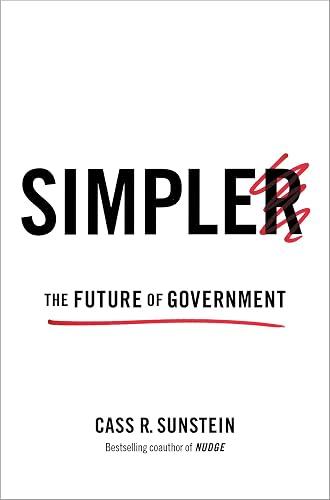
**Author:** Cass R. Sunstein **Estimated Reading Time:** 45 minutes
Why the smallest changes in how choices are presented can have enormous consequences. How governments and organizations can improve outcomes without restricting freedom. Why simplification is one of the most powerful tools available to leaders, policymakers, and anyone who designs systems for human beings.
This book is for anyone who has ever struggled with a confusing form, wondered why they made a decision that wasn't in their best interest, or felt overwhelmed by complexity in modern life. It is for leaders who want to design better systems, citizens who want to understand how policy actually works, and anyone curious about the hidden forces that shape human behavior.
Every day, you make thousands of decisions. Most of them happen without conscious thought. You reach for the first item you see on a shelf. You stick with the default setting on your phone. You follow the path that others have taken before you. You assume that the way things are presented to you is simply the way things are. But what if the way things are presented is actually a choice? What if someone, somewhere, decided what the default would be, what would appear first, what would be easiest to select? And what if that decision, often made without much thought, has enormous consequences for your life, your health, your finances, and your freedom? Cass Sunstein has spent his career thinking about these questions. As a legal scholar, he studied how regulations affect behavior. As the Administrator of the White House Office of Information and Regulatory Affairs under President Obama, he had the opportunity to put his ideas into practice. What he discovered is both simple and profound: the architecture of choice is everywhere, and it matters more than most people realize. The problem is that we have built a world of staggering complexity. Government forms require hours to complete. Financial products come with pages of fine print that almost no one reads. Healthcare choices involve tradeoffs that even experts struggle to understand. We assume that more information, more options, and more freedom are always better. But the evidence tells a different story. When faced with too many choices, people often freeze. When confronted with complex information, they tune out. When given a default option, they tend to stick with it, even when better alternatives exist. This is not because people are stupid or lazy. It is because they are human. And human beings have limited attention, limited time, and limited cognitive resources. The traditional approach to policy assumed that people were rational actors who would carefully weigh costs and benefits before making decisions. This assumption, known as the rational actor model, dominated…
Continue reading in the MinuteRead app
Get the complete 30-minute summary of Simpler
Get the complete summary in the appChoice architecture is unavoidable. Every presentation of options influences choices.
Defaults are powerful. People tend to stick with pre-selected options.
Small changes can have large effects. A simple change in default can transform outcomes.
Government must get simpler. Complexity imposes real costs and undermines trust.
Nudges preserve freedom while steering behavior. They are "soft paternalism."
Effective disclosure is simple, salient, comparable, and actionable.
"Simpler" is a strong fit if you want practical ideas around politics, economics, psychology, especially themes like choice architecture is unavoidable. every presentation of options influences choices; defaults are powerful. people tend to stick with pre-selected options. The MinuteRead summary distills these concepts into a focused read, whether you're deciding whether to buy the book or applying its lessons at work.
Motivated to help readers with "Choice architecture affects outcomes, Cass R. Sunstein wrote “Simpler” to package those ideas for a fast, focused read. In “Simpler”, Cass R. Sunstein focuses on "Choice architecture affects outcomes. Through “Simpler”, Cass R. Sunstein distills the core ideas on politics into lessons readers can absorb in a single short sitting. Readers turn to this work when they want Cass R. Sunstein's perspective on the subject without working through the entire original volum…
View all summaries by Cass R. SunsteinContinue Reading
Access the complete 30-minute summary and thousands more nonfiction books in the MinuteRead app.

Continue reading the complete summary in the MinuteRead app.