MinuteRead
30 min
Book summary
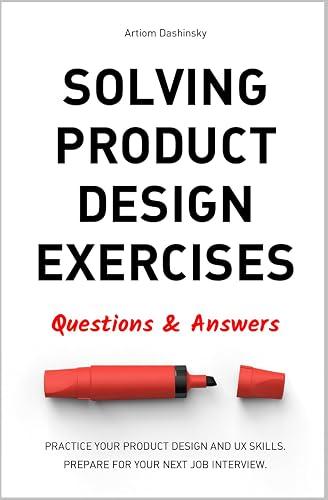
by Artiom Dashinsky
Premium summary · Opens in the app · 30 min read
Every year, thousands of talented designers walk into interview rooms with polished portfolios, impressive case studies, and years of experience. They can craft beautiful interfaces, build cohesive design systems, and speak fluently about typography and spacing. Yet many of them fail at the same hurdle: the product design exercise.
**Author:** Artiom Dashinsky
**Estimated Reading Time:** 45 minutes
**What You'll Learn:**
- Why design exercises exist and what companies actually evaluate through them - A repeatable framework for solving any product design challenge - How to think about design as a business function, not just a visual craft - How to structure and present your solutions with confidence - Practical preparation strategies used by designers at top companies
**Who This Book Is For:**
- Product designers preparing for interviews at tech companies - UX professionals who want to strengthen their product thinking - Designers who feel confident in visual skills but uncertain about business strategy - Anyone who wants to understand how design creates measurable value
Every year, thousands of talented designers walk into interview rooms with polished portfolios, impressive case studies, and years of experience. They can craft beautiful interfaces, build cohesive design systems, and speak fluently about typography and spacing. Yet many of them fail at the same hurdle: the product design exercise. The scenario is familiar. An interviewer presents a vague prompt. "Design a dashboard for a food delivery service." Or "Improve the checkout flow for an e-commerce site." Or "Create a feature that helps people save money." The designer has forty-five minutes, a whiteboard, and no user research, no analytics, no product team to consult. They must think aloud, make decisions, and produce something coherent. Most designers freeze. Not because they lack talent, but because they have never been taught how to approach open-ended product problems. Design schools focus on craft. Online courses teach tools. Communities celebrate visual polish. But the actual work of product design, the work that determines whether a design succeeds or fails in the real world, requires a different set of skills entirely. Artiom Dashinsky wrote this book to close that gap. As a product designer and entrepreneur who has worked with startups and agencies, he noticed a persistent disconnect. Companies increasingly expect designers to think like product managers, to understand business metrics, to connect design decisions to revenue and retention. Designers, meanwhile, often lack the vocabulary and frameworks to demonstrate this thinking. The result is frustration on both sides. Companies struggle to find designers who can operate strategically. Designers struggle to understand what interviewers actually want. This book exists because design exercises are not arbitrary tests. They are simulations of real product work. When a company asks you to design a feature in an hour, they are not checking whether you can draw rectangles. They are evaluating how you think. They want to see whether you ask clarifying questions before jumping to solutions. Whether you consider the business context. Whether you define your audience before designing for it. Whether you can…
Continue reading in the MinuteRead app
Get the complete 30-minute summary of Solving Product Design Exercises
Get the complete summary in the appDesign is about solving problems that matter to users and businesses, not just making things look good.
The 5W1H framework provides a structured approach to any design challenge: Why, Who, When, Where, What, How.
Always clarify the goal before designing. What business objective does this serve?
Define your audience explicitly. Design for them, not for yourself.
Consider the context of use. When and where will the product be used, and what does that mean for the design?
Generate multiple ideas before choosing a direction. Evaluate them on impact and effort.
"Solving Product Design Exercises" is a strong fit if you want practical ideas around design, business, technology, especially themes like design is about solving problems that matter to users and businesses, not just making things look good; the 5w1h framework provides a structured approach to any design challenge: why, who, when, where, what, how. The MinuteRead summary distills these concepts into a focused read, whether you're deciding whether to buy the book or applying its lessons at work.
Motivated to help readers with "Design isn't just about beauty; it's about market relevance and meaningful results." Beyond visual appeal, Artiom Dashinsky wrote “Solving Product Design Exercises” to package those ideas for a fast, focused read. In “Solving Product Design Exercises”, Artiom Dashinsky focuses on "Design isn't just about beauty; it's about market relevance and meaningful results." Beyond visual appeal. Through “Solving Product Design Exercises”, Artiom Dashinsky distills the core …
Continue Reading
Access the complete 30-minute summary and thousands more nonfiction books in the MinuteRead app.

Continue reading the complete summary in the MinuteRead app.