MinuteRead
30 min
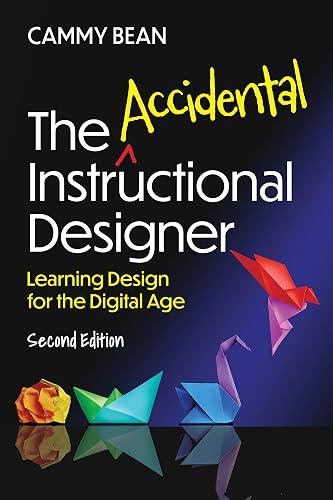
Book summary
by Cammy Bean
Premium summary · Opens in the app · 30 min read
Cammy Bean never planned to become an instructional designer. She fell into the field the way many people do: sideways, unexpectedly, and without a clear map of what the profession actually required. One day she was writing marketing copy. The next, someone handed her a stack of content about software and said, "Turn this into training." She had no formal education in instructional design. She did not know what ADDIE stood for. She had never heard of Bloom's Taxonomy. She was, by her own admissi
**Author:** Cammy Bean **Estimated Reading Time:** 45 minutes
**What You'll Learn:** How to transform from someone who stumbled into instructional design into a confident, intentional practitioner. You will discover the four essential skill areas that make up the learning profession, how to design learning experiences that actually change behavior, and why storytelling and visual design matter as much as instructional theory.
**Who This Book Is For:** Anyone who found themselves responsible for creating training without planning to become an instructional designer. Whether you are a subject matter expert asked to build a course, a teacher transitioning to corporate learning, a writer who fell into e-learning, or a seasoned designer looking to reconnect with the fundamentals, this book speaks directly to your experience.
Cammy Bean never planned to become an instructional designer. She fell into the field the way many people do: sideways, unexpectedly, and without a clear map of what the profession actually required. One day she was writing marketing copy. The next, someone handed her a stack of content about software and said, "Turn this into training." She had no formal education in instructional design. She did not know what ADDIE stood for. She had never heard of Bloom's Taxonomy. She was, by her own admission, a walking accident. Her story is not unusual. The instructional design field is filled with people who arrived through side doors. Former teachers who wanted better hours. Graphic designers who discovered they enjoyed organizing content. Technical writers who got pulled into creating help systems. Subject matter experts who became the go-to person for onboarding new hires. Marketing professionals who found themselves building customer education programs. None of them set out to become instructional designers. Yet here they are, responsible for creating learning experiences that are supposed to change how people perform their jobs. This creates a strange tension. On one hand, accidental instructional designers bring valuable perspectives. They understand business contexts. They know how to write clearly. They have real-world experience in the industries they serve. On the other hand, they often lack the foundational knowledge that makes learning design effective. They do not know why some instructional approaches work and others fail. They cannot articulate the difference between presenting information and creating genuine learning. They build courses the way they were taught in school: lots of content, some bullet points, maybe a quiz at the end. The result is a lot of bad training. Corporate learners sit through endless click-through courses that do nothing to improve their performance. They click Next dozens of times, answer a few obvious multiple-choice questions, and walk away unchanged. The training exists because someone decided there needed to be training. It checks a compliance box. It fills…
Continue reading in the MinuteRead app
Get the complete 30-minute summary of The Accidental Instructional Designer
Get the complete summary in the appStart with problems, not content. Identify the performance gap before designing anything.
Master the four slices of the learning pie: learning, creativity, technology, and business.
Use stories to make learning relatable, memorable, and meaningful.
Design interactions that require thinking, not just clicking.
Invest in visual design. It builds trust and supports learning.
Measure behavior change and business results, not just satisfaction.
"The Accidental Instructional Designer" is a strong fit if you want practical ideas around design, education, business, especially themes like start with problems, not content. identify the performance gap before designing anything; master the four slices of the learning pie: learning, creativity, technology, and business. The MinuteRead summary distills these concepts into a focused read, whether you're deciding whether to buy the book or applying its lessons at work.
Motivated to help readers with 1) Embrace your accidental journey into instructional design 2) Master the four slices of the learning pie 3), Cammy Bean wrote “The Accidental Instructional Designer” to package those ideas for a fast, focused read. In “The Accidental Instructional Designer”, Cammy Bean focuses on 1) Embrace your accidental journey into instructional design 2) Master the four slices of the learning pie 3). Through “The Accidental Instructional Designer”, Cammy Bean distills the co…
Continue Reading
Access the complete 30-minute summary and thousands more nonfiction books in the MinuteRead app.

Continue reading the complete summary in the MinuteRead app.