MinuteRead
21 min
Book summary
Premium summary · Opens in the app · 5 min read
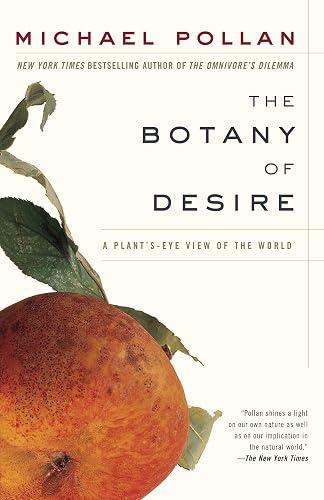
The Botany Of Desire describes how, contrary to popular belief, we might not be using plants as much as plants use us, by getting humans to ensure their survival, thanks to appealing to our desires for beauty, sweetness, intoxication and control.
The Botany Of Desire describes how, contrary to popular belief, we might not be using plants as much as plants use us, by getting humans to ensure their survival, thanks to appealing to our desires for beauty, sweetness, intoxication and control.
The story we’re always told in school is the one of the birds and the bees, explaining how plants depend on bees to spread their pollen, and offer their nectar in exchange. It’s always a story of the “poor plants,” who can’t survive on their own and always need others to help.
This makes it natural for us to think of plants like objects and humans and animals like subjects. We’re the active ones, we “do” stuff, and if we don’t choose to include plants in our plan, well, they get left out.
But what if the plants are in charge? What if they’re the subjects, getting us to do stuff for them?
If you think about it, the only reason that makes us think of plants as helpless creatures is that they can’t move on their own. Fine, so they can’t go anywhere and replicate, but if that’s the only handicap they have, then all they have to do to overcome it is get others to come to them and do it for them.
And boy, are they doing a great job. By producing things that speak to our basic desires, specifically those for sweetness, beauty, intoxication and control, they might really be the ones controlling us.
Let’s look a sweetness and intoxication in particular.
When you visit the US, apples abound. The east coast has an entire apple industry, with many popular tourist activities being apple picking, learning how to make apple cider, and of course visiting apple farms. It might come as a shock to you then that there’s only one kind of apple native to North America: the crabapple, and it’s barely edible. Being most noteworthy for giving its name to a Simpsons character, you might now ask: “Well, where do all the apples come from then?” As it turns out, one man is largely responsible for America’s “appleness”, and that man’s name is Johnny Appleseed. Really named John Chapman, he got his nickname for contributing to the growth of millions of apple trees across 1,200 all throughout the country from 1800 to 1845. European settlers had tried to introduce the apples they brought with them to America for decades, but they were unsuited for the new climate. Johnny realized that every apple’s seeds contain a different set of genes, so by simply planting a lot of them, eventually some would flourish. He traveled wherever America would expand next to, planting new trees and helping…
Continue reading in the MinuteRead app
Get the complete 5-minute summary of The Botany Of Desire
Get the complete summary in the appWhat if plants use you to spread their seeds? They might do so because they can’t move on their own.
By being sweet the apple got one particular guy to spread it all across America.
There’s a place in our brains that’s specifically designed to respond to THC, the substance in marijuana.
"The Botany Of Desire" is a strong fit if you want practical ideas around environment, psychology, science, especially themes like what if plants use you to spread their seeds? they might do so because they can’t move on their own; by being sweet the apple got one particular guy to spread it all across america. The MinuteRead summary distills these concepts into a focused read, whether you're deciding whether to buy the book or applying its lessons at work.
Michael Pollan is the author of seven previous books, including Cooked, Food Rules, In Defense of Food, The Omnivore's Dilemma and The Botany of Desire, all of which were New York Times bestsellers. A longtime contributor to the New York Times Magazine, he also teaches writing at Harvard and the University of California, Berkeley. In 2010, TIME magazine named him one of the one hundred most influential people in the world.
View all summaries by Michael PollanContinue Reading
Access the complete 5-minute summary and thousands more nonfiction books in the MinuteRead app.

Continue reading the complete summary in the MinuteRead app.