MinuteRead
30 min
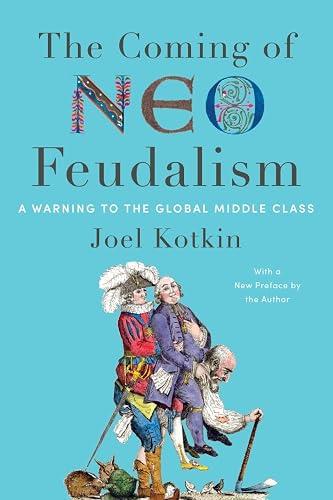
Book summary
by Joel Kotkin
Premium summary · Opens in the app · 30 min read
For most of the twentieth century, the Western world operated on a simple promise. Work hard, acquire skills, save money, and your children would enjoy a better life than you did. This promise was not always perfectly kept, but it was broadly credible. The middle class expanded. Homeownership rose. Education became accessible. The distance between the wealthiest and the average worker, while always significant, did not feel insurmountable.
**Author:** Joel Kotkin
**Estimated Reading Time:** 45 minutes
**What You'll Learn:** How the postindustrial economy is creating a new class hierarchy that mirrors medieval feudalism, why the middle class is being squeezed into servitude, and what can be done to reverse this trajectory before it becomes permanent.
**Who This Book Is For:** Anyone concerned about rising inequality, declining social mobility, the concentration of power in tech monopolies, and the future of liberal democracy. This book speaks to entrepreneurs, workers, parents, students, and citizens who sense that something fundamental has shifted in the social contract and want to understand what comes next.
For most of the twentieth century, the Western world operated on a simple promise. Work hard, acquire skills, save money, and your children would enjoy a better life than you did. This promise was not always perfectly kept, but it was broadly credible. The middle class expanded. Homeownership rose. Education became accessible. The distance between the wealthiest and the average worker, while always significant, did not feel insurmountable. That promise has been breaking down for decades, and Joel Kotkin argues that we are now witnessing something more profound than ordinary economic turbulence. We are seeing the emergence of a new social order that resembles, in its fundamental structure, the feudal systems of the medieval world. Not in the superficial sense of castles and serfs, but in the deeper sense of how power, property, and opportunity are distributed. The medieval feudal order was defined by a rigid hierarchy. At the top sat a small aristocracy that controlled the land, which was the primary source of wealth. Below them stood a clergy that provided ideological justification for the existing order. In the middle, a yeomanry of small property owners maintained a fragile independence. At the bottom, a vast class of serfs worked the land with little hope of improving their condition. Kotkin's central claim is that this structure is reemerging in the twenty-first century, but with new players. The tech oligarchs have replaced the landed aristocracy, controlling the digital platforms that have become the primary infrastructure of modern economic life. A new clerisy of academics, journalists, and credentialed experts has replaced the medieval clergy, providing intellectual cover for concentrated power. The middle class, once the backbone of liberal capitalism, is being squeezed into a precarious existence. And the working class is being transformed into a new kind of serfdom, dependent on the goodwill of their superiors and the transfers of the state. This is not a partisan argument. Kotkin is careful to note that the forces driving neo-feudalism transcend left and right. Globalization, technological change, the financialization of the economy, and the concentration of wealth in a handful of metropolitan regions…
Continue reading in the MinuteRead app
Get the complete 30-minute summary of The Coming of Neo-Feudalism
Get the complete summary in the appNeo-feudalism is a new social order characterized by concentrated wealth, declining mobility, and a rigid hierarchy.
The tech oligarchs are the new aristocracy, controlling the digital platforms that have become the infrastructure of mod
The clerisy is the new clergy, providing ideological justification for concentrated power.
The middle class is being squeezed, and its decline threatens the foundations of liberal democracy.
The working class is being transformed into a new serfdom, characterized by precarious employment and limited opportunit
Cities are becoming increasingly divided between affluent enclaves and impoverished peripheries.
"The Coming of Neo-Feudalism" is a strong fit if you want practical ideas around politics, economics, sociology, especially themes like neo-feudalism is a new social order characterized by concentrated wealth, declining mobility, and a rigid hierarchy; the tech oligarchs are the new aristocracy, controlling the digital platforms that have become the infrastructure of mod. The MinuteRead summary distills these concepts into a focused read, whether you're deciding whether to buy the book or applying its lessons at work.
Motivated to help readers with what we are seeing is a new form of aristocracy developing in the United States and beyond, Joel Kotkin wrote “The Coming of Neo-Feudalism” to package those ideas for a fast, focused read. In “The Coming of Neo-Feudalism”, Joel Kotkin focuses on what we are seeing is a new form of aristocracy developing in the United States and beyond. Through “The Coming of Neo-Feudalism”, Joel Kotkin distills the core ideas on politics into lessons readers can absorb in a single …
Continue Reading
Access the complete 30-minute summary and thousands more nonfiction books in the MinuteRead app.

Continue reading the complete summary in the MinuteRead app.