MinuteRead
30 min
Book summary
Premium summary · Opens in the app · 30 min read
Every organization today faces the same underlying challenge. The world is changing faster than the methods we use to understand it. Markets shift. Technologies emerge. Customer expectations evolve. And yet, most companies still approach innovation the way they did decades ago: they gather requirements, write specifications, build solutions, and hope for the best.
**Author:** Michael Lewrick
**Estimated Reading Time:** 45 minutes
**What You'll Learn:**
- How to apply the complete design thinking process from empathy to testing - Why human-centered problem solving outperforms technology-first approaches - How to combine design thinking with data analytics, AI, and strategic foresight - Practical tools for prototyping, ideation, and problem framing - How to embed design thinking into your organization's culture
**Who This Book Is For:**
This book is for product managers, entrepreneurs, designers, executives, and anyone who wants to solve complex problems in a structured yet creative way. If you have ever felt stuck trying to innovate, if you have launched solutions that nobody wanted, or if you want to build a more customer-centric organization, this book will give you the mindset and tools to move forward with confidence.
Every organization today faces the same underlying challenge. The world is changing faster than the methods we use to understand it. Markets shift. Technologies emerge. Customer expectations evolve. And yet, most companies still approach innovation the way they did decades ago: they gather requirements, write specifications, build solutions, and hope for the best. The result is predictable. Studies consistently show that a large percentage of new products fail. Not because the engineering was poor or the marketing was weak, but because the fundamental assumptions about what customers actually needed were wrong from the start. Teams spend months or years building something that nobody wants. This is the problem design thinking was created to solve. Design thinking is not a new concept. Its roots trace back to the design methods movement of the 1960s and the work of pioneers like Herbert Simon, who argued that design is not just about making things look beautiful but about changing existing situations into preferred ones. In the decades since, organizations like IDEO and the Stanford d.school have refined and popularized the approach, turning it into a practical methodology that anyone can learn. At its core, design thinking is an empathetic, optimistic, and creative way of working to shape the future. It is a structured approach to innovation that puts human needs at the center of the process. Instead of starting with a technology or a business requirement, design thinking starts with people. What do they struggle with? What do they desire? What would make their lives meaningfully better? The reason this matters so much is simple: most innovation failures are not technical failures. They are failures of understanding. Teams build solutions for problems that do not exist, or they solve problems in ways that do not fit how people actually live and work. Design thinking addresses this by forcing teams to slow down at the beginning, to observe and listen before…
Continue reading in the MinuteRead app
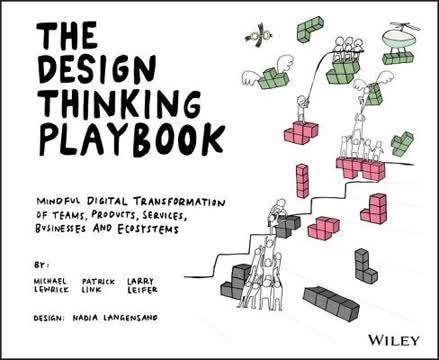
Get the complete 30-minute summary of The Design Thinking Playbook
Get the complete summary in the appStart with empathy: understand real user needs before building anything.
Define the right problem: a well-framed problem statement guides everything that follows.
Generate many ideas: quantity leads to quality, and wild ideas contain seeds of breakthrough.
Prototype quickly: make ideas tangible so they can be tested and improved.
Test to learn: embrace failure as a source of insight, not a mark of shame.
Iterate continuously: design thinking is a cycle, not a linear process.
"The Design Thinking Playbook" is a strong fit if you want practical ideas around design, business, education, especially themes like start with empathy: understand real user needs before building anything; define the right problem: a well-framed problem statement guides everything that follows. The MinuteRead summary distills these concepts into a focused read, whether you're deciding whether to buy the book or applying its lessons at work.
Michael Lewrick is an author and expert in design thinking and innovation. He co-authored The Design Thinking Playbook , which aims to provide a comprehensive guide to design thinking tools and methodologies. Lewrick's approach combines design thinking with systems thinking and strategic foresight, focusing on practical application in business contexts. His work emphasizes the importance of adapting design thinking principles to digital transformation and ecosystem design. Lewrick collaborates w…
View all summaries by Michael LewrickContinue Reading
Access the complete 30-minute summary and thousands more nonfiction books in the MinuteRead app.

Continue reading the complete summary in the MinuteRead app.