MinuteRead
30 min
Britain changed more between 1950 and 2000 than it had in the previous five hundred years. A country that had been overwhelmingly homogeneous since the Norman Conquest became, within the span of a single lifetime, one of the most ethnically diverse nations on earth. This transformation did not emerge from conquest, famine, or natural disaster. It emerged from policy decisions made by a small number of people who never asked the public for permission.
**Author:** Ed West
**Estimated Reading Time:** 45 minutes
**What You'll Learn:**
- Why Britain's demographic transformation happened with unprecedented speed - What the evidence actually shows about diversity and social trust - Why multiculturalism produced parallel communities rather than integration - How political elites ignored public concerns for decades - What the rise of identity politics means for Western societies - How to think clearly about immigration without ideology
**Who This Book Is For:**
This book is for anyone who has sensed that the public conversation about immigration and diversity does not match lived reality. It is for readers who want to understand why communities feel different than they did a generation ago, why trust in institutions has collapsed, and why polite society refuses to discuss what everyone privately acknowledges. If you have ever wondered whether you are allowed to ask certain questions, this book will help you understand why those questions became forbidden and what the evidence actually shows.
Britain changed more between 1950 and 2000 than it had in the previous five hundred years. A country that had been overwhelmingly homogeneous since the Norman Conquest became, within the span of a single lifetime, one of the most ethnically diverse nations on earth. This transformation did not emerge from conquest, famine, or natural disaster. It emerged from policy decisions made by a small number of people who never asked the public for permission. The numbers tell a story that most Britons still struggle to comprehend. In 1951, the African-Caribbean and South Asian population of Great Britain numbered approximately 80,000 people. By 1991, that figure had reached three million. By the early twenty-first century, one in four births in England and Wales was to a foreign-born mother. In London, white British people became a minority in their own capital city. This book exists because the gap between what happened and what people were allowed to say about what happened became unsustainable. For decades, the political class insisted that mass immigration was an unqualified good, that diversity was strength, and that anyone who questioned this consensus was motivated by ignorance or malice. The public never believed this. Poll after poll showed overwhelming opposition to mass immigration. Yet the policies continued, and the gap between elite opinion and public sentiment widened into a chasm. The problem this book addresses is not immigration itself. People have always moved across borders, and Britain has absorbed waves of newcomers throughout its history. The problem is the refusal to think honestly about the consequences of immigration at scale and speed. The problem is the illusion that diversity automatically produces benefits without costs. The problem is the assumption that all cultures are equally compatible with liberal democratic…
Continue reading in the MinuteRead app
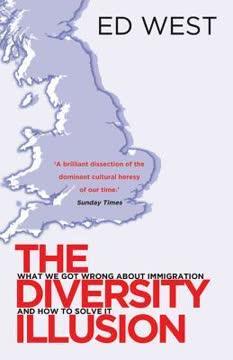
Get the complete 30-minute summary of The Diversity Illusion
Get the complete summary in the appBritain's demographic transformation happened with unprecedented speed, making genuine integration nearly impossible.
The economic benefits of immigration are minimal and concentrated among the wealthy, while costs fall on the poor.
Ethnic diversity correlates with reduced social trust, civic engagement, and community participation.
Multiculturalism failed because it removed the pressure to integrate, producing parallel communities.
Islam poses unique challenges for integration because it is a comprehensive way of life that can conflict with secular v
The political establishment embraced mass immigration despite overwhelming public opposition.
"The Diversity Illusion" is a strong fit if you want practical ideas around politics, history, sociology, especially themes like britain's demographic transformation happened with unprecedented speed, making genuine integration nearly impossible; the economic benefits of immigration are minimal and concentrated among the wealthy, while costs fall on the poor. The MinuteRead summary distills these concepts into a focused read, whether you're deciding whether to buy the book or applying its lessons at work.
Ed West is a British author and journalist known for his controversial writings on immigration and diversity. He has written for various publications, including The Spectator and The Telegraph. West's work often challenges mainstream narratives on multiculturalism and immigration policy. In "The Diversity Illusion," he argues that mass immigration and diversity have negatively impacted British society, citing research on social cohesion and cultural conflicts. West's approach is data-driven, but…
View all summaries by Ed WestContinue Reading
Access the complete 30-minute summary and thousands more nonfiction books in the MinuteRead app.

Continue reading the complete summary in the MinuteRead app.