MinuteRead
30 min
Book summary
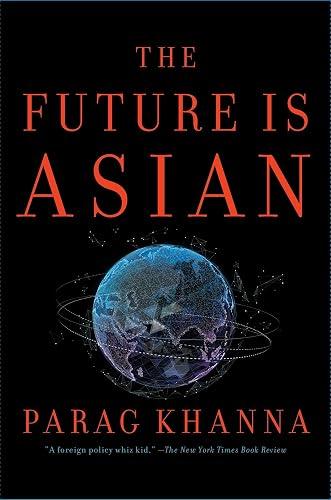
by Parag Khanna
Premium summary · Opens in the app · 30 min read
For the past two centuries, the world has been taught to see itself through Western eyes. The maps on classroom walls placed Europe at the center. The history books told stories of Western exploration, Western industrialization, Western leadership. The institutions that governed global affairs were designed in Western capitals. The very idea of modernity became synonymous with Westernization.
**Author:** Parag Khanna
**Estimated Reading Time:** 45 minutes
**What You'll Learn:** Why Asia is reclaiming its historical position as the center of global civilization, how Asian nations are building a new system of international relations, and what this means for the West and the world.
**Who This Book Is For:** Anyone seeking to understand the most significant geopolitical shift of our century, from business leaders and policymakers to students and curious readers who want to see beyond Western-centric narratives.
For the past two centuries, the world has been taught to see itself through Western eyes. The maps on classroom walls placed Europe at the center. The history books told stories of Western exploration, Western industrialization, Western leadership. The institutions that governed global affairs were designed in Western capitals. The very idea of modernity became synonymous with Westernization. This worldview was never accurate. It was a temporary condition created by a specific historical anomaly: the Industrial Revolution, which allowed a small corner of the Eurasian landmass to project power across the globe for roughly two hundred years. Before that period, Asia was the world's economic and cultural center. Now, after two centuries of Western dominance, Asia is returning to its historical norm. Parag Khanna's "The Future Is Asian" argues that we are witnessing not the rise of Asia but its return. For most of recorded history, Asia accounted for the majority of global economic output, housed the world's largest cities, produced the most advanced technologies, and hosted the most sophisticated systems of trade and governance. The Silk Road connected China to the Mediterranean. The Indian Ocean trade network linked East Africa to Southeast Asia. Asian empires managed diverse populations across vast territories with systems of administration that European powers would later study and adopt. The problem with current discussions about Asia is that they tend to view the region through a Western lens. Analysts ask whether China will replace the United States as the world's dominant power, as if global history is a game of musical chairs with a single seat. They worry about whether Asian countries will adopt Western democratic norms, as if democracy is the only legitimate form of governance. They measure Asian progress against Western benchmarks, as if the West is the permanent standard against which all civilizations must be judged. Khanna rejects this framing. He argues that Asia is not trying to become the West. Asia is building something new, or rather, something old made new again: a multipolar system in which multiple powers coexist, cooperate, and compete without any single nation dominating all others. This system draws on Asia's deep history of managing diversity, its traditions of technocratic governance, and its pragmatic approach to international relations.…
Continue reading in the MinuteRead app
Get the complete 30-minute summary of The Future Is Asian
Get the complete summary in the appAsia was the world's economic and cultural center for most of recorded history.
Western dominance was a temporary anomaly that is now ending.
Asia is building a new international system based on pragmatism and mutual benefit.
China is the dominant power in Asia but is not trying to replace the United States as global hegemon.
Russia and Turkey are pivoting eastward, changing the balance of power in Eurasia.
West Asia is reorienting toward Asian markets and Asian powers.
"The Future Is Asian" is a strong fit if you want practical ideas around politics, economics, history, especially themes like asia was the world's economic and cultural center for most of recorded history; western dominance was a temporary anomaly that is now ending. The MinuteRead summary distills these concepts into a focused read, whether you're deciding whether to buy the book or applying its lessons at work.
Motivated to help readers with for most of recorded history, Parag Khanna wrote “The Future Is Asian” to package those ideas for a fast, focused read. In “The Future Is Asian”, Parag Khanna focuses on for most of recorded history. Through “The Future Is Asian”, Parag Khanna distills the core ideas on politics into lessons readers can absorb in a single short sitting. Readers turn to this work when they want Parag Khanna's perspective on the subject without working through the entire original vol…
Continue Reading
Access the complete 30-minute summary and thousands more nonfiction books in the MinuteRead app.

Continue reading the complete summary in the MinuteRead app.