MinuteRead
15 min
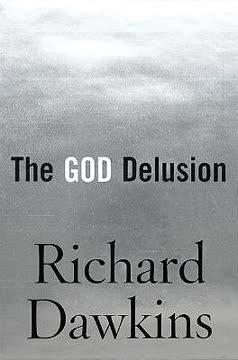
Some ideas are so familiar, so deeply woven into the fabric of society, that we forget to ask whether they are true. The existence of God is such an idea. For billions of people, God is not a hypothesis to be tested but a foundation to be assumed. Questioning it feels not just wrong but somehow improper, like asking whether gravity exists or whether the sun will rise tomorrow.
**Author:** Richard Dawkins **Estimated Reading Time:** 45 minutes
**What You'll Learn**
Why the God hypothesis has failed to explain the universe, how natural selection makes a designer unnecessary, why morality doesn't require religion, how faith became a cultural virus, and what science offers that religion never can.
**Who This Book Is For**
Anyone who has ever wondered whether belief in God makes sense. Anyone who suspects religion might be a human invention rather than a divine revelation. Anyone raised in a faith tradition who wants permission to think clearly about what they were taught. And anyone who simply wants to understand why a respected scientist would call religion a delusion.
Some ideas are so familiar, so deeply woven into the fabric of society, that we forget to ask whether they are true. The existence of God is such an idea. For billions of people, God is not a hypothesis to be tested but a foundation to be assumed. Questioning it feels not just wrong but somehow improper, like asking whether gravity exists or whether the sun will rise tomorrow. Yet the God question is unlike any other question we face. If God exists, everything changes. If God does not exist, everything changes too. This is not a trivial matter of personal preference, like whether you prefer chocolate or vanilla. This is a question about the fundamental nature of reality. And like all questions about reality, it deserves honest investigation. Richard Dawkins wrote The God Delusion because he believes that honest investigation has been systematically discouraged. Religion, he argues, has placed itself in a privileged position where it demands respect by default. You can criticize someone's political views, their taste in music, even their choice of spouse. But criticize their religious beliefs? That is considered rude, intolerant, even bigoted. This special protection is strange when you think about it. Religious beliefs make claims about reality. They assert that a supernatural being created the universe, listens to prayers, performs miracles, and will judge us after death. These are extraordinary claims. They should require extraordinary evidence. Yet believers are rarely asked to provide any. Dawkins does not approach this topic as a philosopher of religion. He approaches it as a scientist. A scientist looks at the evidence and follows it wherever it leads. When a hypothesis fails to explain the data, a scientist abandons it. The God hypothesis, Dawkins argues, has failed. It does not explain the complexity of life. It does not explain the origin of the universe. It does not provide a coherent foundation for morality. And it creates more problems than it solves. The book is not merely an attack on religion. It is also a celebration of what science…
Continue reading in the MinuteRead app
Get the complete 30-minute summary of The God Delusion
Get the complete summary in the appThe God hypothesis is unnecessary. Natural selection explains the complexity of life without a designer.
God is more improbable than the universe he is supposed to explain. Invoking God makes the problem worse, not better.
Morality does not come from religion. It has evolutionary roots and is refined by reason.
Faith is not a virtue. Believing without evidence is intellectually irresponsible.
Religious texts are not reliable moral guides. They contain material that is abhorrent by modern standards.
Religion persists because it exploits childhood vulnerability and psychological traits that evolved for other purposes.
"The God Delusion" is a strong fit if you want practical ideas around religion, science, philosophy—especially themes like the god hypothesis is unnecessary. natural selection explains the complexity of life without a designer; god is more improbable than the universe he is supposed to explain. invoking god makes the problem worse, not better. The MinuteRead summary distills these concepts into a focused read, whether you're deciding whether to buy the book or applying its lessons at work.
Richard Dawkins is a renowned British evolutionary biologist and author known for his contributions to science communication and atheist activism. Born in 1941, he gained prominence with his 1976 book "The Selfish Gene." Dawkins held the Charles Simonyi Chair for the Public Understanding of Science at Oxford University from 1995 to 2008. He has written numerous books on evolution, atheism, and science, including "The Blind Watchmaker" and "The God Delusion." Dawkins is known for his outspoken cr…
View all summaries by Richard DawkinsContinue Reading
Access the complete 30-minute summary and thousands more nonfiction books in the MinuteRead app.

Continue reading the complete summary in the MinuteRead app.