MinuteRead
30 min
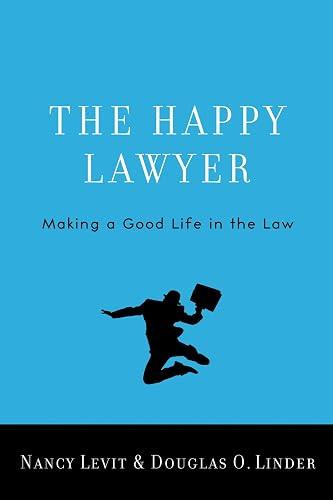
Book summary
by Nancy Levit
Premium summary · Opens in the app · 30 min read
1) Lawyer happiness is achievable but requires intentional effort 2) Genetics and circumstances influence happiness, but personal choices matter most 3) Autonomy and control are crucial for lawyer satisfaction
**Author:** Nancy Levit (with Douglas O. Linder)
**Estimated Reading Time:** 45 minutes
**What You'll Learn:** Why lawyers report some of the highest rates of dissatisfaction and depression among professionals, what research actually reveals about happiness, and how to build a legal career that provides meaning, autonomy, and genuine fulfillment.
**Who This Book Is For:** Law students wondering if they made the right choice, associates questioning whether to stay in practice, partners feeling burned out despite financial success, and anyone in the legal profession who suspects there must be more to a legal career than billable hours and prestige.
The legal profession has a happiness problem. Study after study reveals that lawyers suffer from depression at rates significantly higher than the general population. They report lower job satisfaction than professionals in medicine, education, and business. They struggle with substance abuse, broken relationships, and a gnawing sense that the work they do does not matter. The grim statistics have become so familiar that they are almost a cliché within the profession itself. Yet there is a puzzle at the heart of this problem. Lawyers are, by most objective measures, among the most privileged workers in society. They earn high salaries. They enjoy social status. They solve interesting problems. They have the intellectual tools to understand their own unhappiness. So why are so many of them miserable? Nancy Levit and Douglas Linder set out to answer this question. What they discovered is both sobering and hopeful. The legal profession does contain structural features that undermine well-being: the adversarial nature of litigation, the pressure of billable hours, the hierarchy of law firm culture, and the constant exposure to conflict. But the research also reveals something surprising. The biggest determinants of lawyer happiness are not the external conditions of the job. They are the internal choices lawyers make about how to approach their work and their lives. The authors draw on a rich body of research from psychology, neuroscience, and sociology to understand what actually makes people happy. They examine the famous happiness equation that emerged from studies of twins: roughly 50 percent of happiness is genetic, 10 percent is circumstantial, and 40 percent is within our control. For lawyers, this is liberating news. It means that while the profession may present real challenges, the power to create a satisfying career lies substantially in the hands of the individual lawyer. The book is not a collection of platitudes. It is a practical guide grounded in evidence. It explains why autonomy matters more than salary, why relationships predict satisfaction better than prestige, why finding flow in legal work transforms the experience of practice, and why aligning work with personal values creates a sense of purpose that…
Continue reading in the MinuteRead app
Get the complete 30-minute summary of The Happy Lawyer
Get the complete summary in the appHappiness is 50 percent genetic, 10 percent circumstantial, and 40 percent within your control. Focus on the 40 percent.
Autonomy is essential. Claim control over your work wherever possible.
Relationships are the most powerful source of happiness. Invest in them deliberately.
Align your work with your values. Meaning matters more than money.
Seek flow. Find work that challenges you at the right level and creates deep engagement.
Do not postpone happiness. Balance is something to practice now, not later.
"The Happy Lawyer" is a strong fit if you want practical ideas around law, self help, psychology, especially themes like happiness is 50 percent genetic, 10 percent circumstantial, and 40 percent within your control. focus on the 40 percent; autonomy is essential. claim control over your work wherever possible. The MinuteRead summary distills these concepts into a focused read, whether you're deciding whether to buy the book or applying its lessons at work.
Motivated to help readers with 1) Lawyer happiness is achievable but requires intentional effort 2) Genetics and circumstances influence, Nancy Levit wrote “The Happy Lawyer” to package those ideas for a fast, focused read. In “The Happy Lawyer”, Nancy Levit focuses on 1) Lawyer happiness is achievable but requires intentional effort 2) Genetics and circumstances influence. Through “The Happy Lawyer”, Nancy Levit distills the core ideas on law into lessons readers can absorb in a single short si…
Continue Reading
Access the complete 30-minute summary and thousands more nonfiction books in the MinuteRead app.

Continue reading the complete summary in the MinuteRead app.