MinuteRead
30 min
Book summary
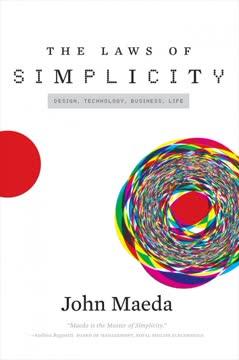
by John Maeda
Premium summary · Opens in the app · 30 min read
We live in an age of overwhelming complexity. Our devices have more features than we will ever use. Our software demands constant updates. Our homes fill with objects that promised to simplify our lives but somehow made them more complicated. The average person now makes more decisions before breakfast than their grandparents made in a week.
**Author:** John Maeda **Estimated Reading Time:** 45 minutes
**What You'll Learn:**
- The ten fundamental laws that govern simplicity in design, technology, and life - How to reduce complexity without sacrificing meaning - Practical methods for organizing information, saving time, and building trust - Why simplicity and complexity need each other - How to apply these principles to your work, products, and daily decisions
**Who This Book Is For:**
Anyone who has ever felt overwhelmed by technology, frustrated by a poorly designed product, or curious about why some things feel effortless while others feel exhausting. Whether you are a designer, entrepreneur, manager, or simply someone seeking clarity in a cluttered world, this book offers a framework for thinking about simplicity that will change how you approach problems.
We live in an age of overwhelming complexity. Our devices have more features than we will ever use. Our software demands constant updates. Our homes fill with objects that promised to simplify our lives but somehow made them more complicated. The average person now makes more decisions before breakfast than their grandparents made in a week. This is not a trivial problem. Complexity creates stress. It wastes time. It prevents us from focusing on what actually matters. And yet, complexity keeps growing. Every new product adds features. Every new service adds options. Every new update adds layers. The technology industry has convinced itself that more is better, and we have accepted this premise without question. John Maeda saw this problem from the inside. As a professor at MIT's Media Lab, he worked at the intersection of computer science, design, and art. He watched brilliant engineers create powerful technologies that ordinary people struggled to use. He observed how the pursuit of capability often came at the cost of usability. And he began asking a simple question: what if we thought about simplicity with the same rigor and discipline that we apply to complexity? The Laws of Simplicity is his answer. It is not a manifesto against technology or a nostalgic plea for a simpler past. Maeda is not suggesting we abandon our smartphones or return to paper maps. Instead, he offers something more practical: a set of principles for managing complexity intelligently. His central insight is that simplicity is not the absence of complexity. It is the thoughtful organization of complexity. It is the art of making the complex feel manageable. What makes Maeda's approach distinctive is his background. He is not a minimalist guru or a productivity consultant. He is a computer scientist who understands the technical constraints of building systems. He is an artist who appreciates the emotional dimensions of design. He is an educator who knows how to explain difficult concepts…
Continue reading in the MinuteRead app
Get the complete 30-minute summary of The Laws of Simplicity
Get the complete summary in the app**Reduce thoughtfully.** Remove what is unnecessary, but keep what matters. Use the SHE principle: Shrink, Hide, Embody.
**Organize what remains.** Use the SLIP method: Sort, Label, Integrate, Prioritize. Organization makes many appear fewer
**Save time.** Time savings feel like simplicity. Look for friction and remove it.
**Learn.** Knowledge makes everything simpler. The more you understand, the simpler things become.
**Balance simplicity and complexity.** They need each other. The goal is balance, not elimination.
**Consider context.** Simplicity does not exist in isolation. What works in one context may fail in another.
"The Laws of Simplicity" is a strong fit if you want practical ideas around design, business, technology, especially themes like **reduce thoughtfully.** remove what is unnecessary, but keep what matters. use the she principle: shrink, hide, embody; **organize what remains.** use the slip method: sort, label, integrate, prioritize. organization makes many appear fewer. The MinuteRead summary distills these concepts into a focused read, whether you're deciding whether to buy the book or applying its lessons at work.
John Maeda is a multifaceted artist, designer, computer scientist, and educator known for integrating technology, education, and arts. He pioneered interactive motion graphics and promoted simplicity in the digital age. Maeda's work is exhibited globally and held in prestigious museum collections. He has developed projects for major corporations and received numerous awards. Formerly a professor at MIT, Maeda taught media arts and sciences for 12 years. He has published four books, including "Th…
View all summaries by John MaedaContinue Reading
Access the complete 30-minute summary and thousands more nonfiction books in the MinuteRead app.

Continue reading the complete summary in the MinuteRead app.