MinuteRead
30 min
Imagine a farmer in sub-Saharan Africa who receives a microloan, plants her crops, and tends them faithfully. The harvest approaches and she calculates that this year she will finally earn enough to send her children to school and perhaps invest in a better roof for her home. Then one night, a neighbor with a machete comes and takes everything. She knows who did it. The village knows who did it. But the nearest police station is a day's walk away, the officers demand bribes she cannot pay, and t
**Author:** Gary A. Haugen **Estimated Reading Time:** 45 minutes
This book reveals a hidden catastrophe unfolding across the developing world. It is not a natural disaster. It is not a disease. It is not a famine. It is violence. Everyday, ordinary violence that the global poor endure not as an exception but as a condition of life. You will learn why billions of dollars in aid and decades of development work have failed to lift millions out of poverty, and you will discover the single missing ingredient that makes all other efforts unsustainable: a functioning public justice system that protects the poor from the predators who prey upon them.
This book is for anyone who has ever wondered why poverty persists despite enormous charitable investment. It is for development professionals who sense something is missing from their programs. It is for donors, volunteers, and advocates who want their efforts to create lasting change. It is for people of faith and conscience who believe that all human beings deserve protection from violence. And it is for anyone willing to look honestly at a problem the world has chosen to ignore.
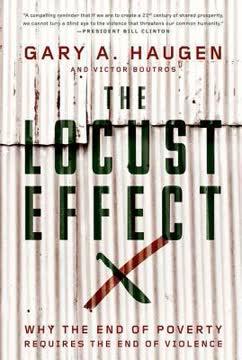
Imagine a farmer in sub-Saharan Africa who receives a microloan, plants her crops, and tends them faithfully. The harvest approaches and she calculates that this year she will finally earn enough to send her children to school and perhaps invest in a better roof for her home. Then one night, a neighbor with a machete comes and takes everything. She knows who did it. The village knows who did it. But the nearest police station is a day's walk away, the officers demand bribes she cannot pay, and the courts are a distant abstraction for people like her. So nothing happens. The thief keeps her harvest. Her children do not go to school. The loan goes unpaid. And the cycle continues. Multiply this story by hundreds of millions. This is the reality Gary Haugen documents in The Locust Effect. The title comes from the biblical plague of locusts, insects that descend in swarms and devour everything green, leaving nothing but devastation behind. For the global poor, Haugen argues, everyday violence functions exactly like those locusts. It arrives predictably, consumes the fruits of their labor, and leaves them with nothing. And just as ancient farmers could do little against a locust swarm without collective action, individual poor people cannot defend themselves against the criminals, traffickers, abusers, and corrupt officials who prey upon them. The world has responded to poverty with extraordinary generosity. We have built schools, dug wells, distributed medicines, and funded microenterprise. These are good and necessary efforts. But Haugen makes a devastating case that they are built on a foundation…
Continue reading in the MinuteRead app
Get the complete 30-minute summary of The Locust Effect
Get the complete summary in the appEveryday violence is the defining experience of poverty for billions of people.
This violence persists because the justice system does not protect the poor.
Slavery is larger today than at any time in history.
Sexual violence against women and children is endemic in poor communities.
Property theft keeps the poor from building assets and escaping poverty.
Police in many developing countries are predators, not protectors.
"The Locust Effect" is a strong fit if you want practical ideas around politics, social justice, economics, especially themes like everyday violence is the defining experience of poverty for billions of people; this violence persists because the justice system does not protect the poor. The MinuteRead summary distills these concepts into a focused read, whether you're deciding whether to buy the book or applying its lessons at work.
Gary A. Haugen is the founder and CEO of International Justice Mission, a Washington, DC-based human rights organization. His background includes working in the civil rights division of the US Department of Justice and serving as director of the United Nations genocide investigation in Rwanda. Haugen's expertise in human rights and justice issues stems from his extensive experience in both government and non-profit sectors. He has authored multiple books on justice and injustice, including "Good…
View all summaries by Gary A. HaugenContinue Reading
Access the complete 30-minute summary and thousands more nonfiction books in the MinuteRead app.

Continue reading the complete summary in the MinuteRead app.