MinuteRead
30 min
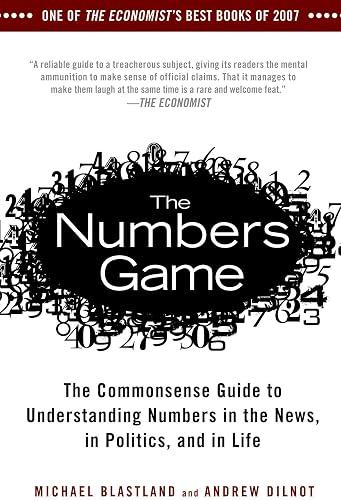
Book summary
by Michael Blastland
Premium summary · Opens in the app · 30 min read
We live in an age of numbers. Every morning brings fresh statistics about the economy, health risks, crime rates, school performance, and a thousand other measures of modern life. Politicians wield figures like weapons. Advertisers deploy them as persuasion. Journalists build stories around them. Social media amplifies them within seconds.
**Author:** Michael Blastland
**Estimated Reading Time:** 45 minutes
**What You'll Learn:**
- Why numbers dominate modern life and why they so often mislead - How to spot statistical manipulation in news, politics, and business - Practical techniques for making sense of data without being an expert - Why chance and randomness shape more outcomes than we admit - How to think clearly about risk, averages, and comparisons
**Who This Book Is For:**
Anyone who has ever felt confused, frustrated, or deceived by statistics. If you read the news, vote, make health decisions, manage money, or simply want to understand the world more clearly, this book will change how you see numbers forever.
We live in an age of numbers. Every morning brings fresh statistics about the economy, health risks, crime rates, school performance, and a thousand other measures of modern life. Politicians wield figures like weapons. Advertisers deploy them as persuasion. Journalists build stories around them. Social media amplifies them within seconds. Yet for all this numerical saturation, most of us remain surprisingly ill-equipped to understand what these numbers actually mean. We accept them too readily or dismiss them too quickly. We feel overwhelmed by their complexity or seduced by their apparent precision. We swing between blind trust and cynical rejection, never quite finding the middle ground where genuine understanding lives. Michael Blastland has spent his career helping people navigate this terrain. As the creator of BBC Radio 4's "More or Less" program, he has spent years investigating the stories behind the statistics, uncovering errors, exposing manipulations, and teaching ordinary people how to think more clearly about the numbers that shape their lives. The problem, Blastland argues, is not that numbers are useless. Quite the opposite. Numbers are among the most powerful tools we have for understanding reality. The problem is that we have never been properly taught how to use them. We treat statistics as though they were simple facts, when in truth they are complex constructions, built on assumptions, shaped by choices, and subject to all the frailties of human judgment. Consider a simple question: Is crime going up or down in your area? The answer depends on what you count as crime, how you count it, who reports it, what time period you examine, and a dozen other factors. The official figure might be technically accurate while still being deeply misleading. The real story lies in the details, and those details are rarely included in the headline. This book exists because the gap between what numbers seem to say and what they actually mean has never been wider. We are bombarded with claims about everything from miracle diets to economic doom, each backed by statistics that appear…
Continue reading in the MinuteRead app
Get the complete 30-minute summary of The Numbers Game
Get the complete summary in the appEvery statistic is the product of human choices. Ask what was measured, how it was measured, and what was excluded.
Divide large numbers by the relevant population to make them personal and comprehensible.
Randomness produces patterns that look meaningful. Before seeing a trend, ask whether chance could explain it.
Averages hide variety. Always ask about the spread, the shape, and the outliers.
When a measure becomes a target, people game it. Anticipate unintended consequences.
Absolute risk matters more than relative risk. Always ask for the baseline.
"The Numbers Game" is a strong fit if you want practical ideas around mathematics, science, economics, especially themes like every statistic is the product of human choices. ask what was measured, how it was measured, and what was excluded; divide large numbers by the relevant population to make them personal and comprehensible. The MinuteRead summary distills these concepts into a focused read, whether you're deciding whether to buy the book or applying its lessons at work.
Motivated to help readers with don't give up the game on every political, Michael Blastland wrote “The Numbers Game” to package those ideas for a fast, focused read. In “The Numbers Game”, Michael Blastland focuses on don't give up the game on every political. Through “The Numbers Game”, Michael Blastland distills the core ideas on mathematics into lessons readers can absorb in a single short sitting. Readers turn to this work when they want Michael Blastland's perspective on the subject without…
Continue Reading
Access the complete 30-minute summary and thousands more nonfiction books in the MinuteRead app.

Continue reading the complete summary in the MinuteRead app.