MinuteRead
30 min
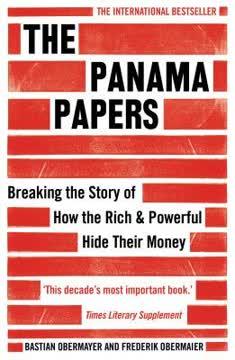
In early 2015, a message arrived at the offices of the Süddeutsche Zeitung, a respected German newspaper. The sender was anonymous. The message was simple: "Hello. This is John Doe. Interested in data?"
**Author:** Frederik Obermaier
**Estimated Reading Time:** 45 minutes
**What You'll Learn:**
How a single anonymous leak exposed the hidden architecture of global offshore finance, why the world's most powerful people rely on shell companies to conceal their wealth, and what the Panama Papers investigation reveals about the systems that enable tax evasion, corruption, and inequality on a massive scale. You will understand how Mossack Fonseca operated as the engine of the shadow economy, how investigative journalists collaborated across borders to crack open secrets that governments could not or would not touch, and why financial secrecy carries a devastating human cost.
**Who This Book Is For:**
Anyone who wants to understand how wealth and power operate in the shadows. Citizens who sense the system is rigged but cannot explain how. Professionals in finance, law, and journalism who need to see the mechanics of offshore secrecy. People who care about inequality and wonder why governments seem unable to fund schools, hospitals, and infrastructure while the richest grow ever richer. This book is for readers ready to look behind the curtain.
In early 2015, a message arrived at the offices of the Süddeutsche Zeitung, a respected German newspaper. The sender was anonymous. The message was simple: "Hello. This is John Doe. Interested in data?" What followed would become the largest leak in the history of data journalism. The source, still unknown to this day, handed over 11.5 million documents from a Panamanian law firm called Mossack Fonseca. The files totaled 2.6 terabytes of data. They contained emails, contracts, bank records, and corporate registrations spanning four decades. They exposed a parallel financial universe that most people never see, a world where the wealthy, the powerful, and the criminal move money through shell companies in secrecy jurisdictions, hiding assets from tax authorities, creditors, law enforcement, and public view. The problem the Panama Papers exposed is not new. For decades, a global offshore system has allowed those with resources to opt out of the obligations that ordinary citizens accept as given. Paying taxes. Following financial rules. Being accountable. This system operates through a network of law firms, banks, accountants, and intermediaries who create corporate structures designed to obscure ownership and evade scrutiny. The result is a two-tier world: one set of rules for those who can afford offshore services, and another for everyone else. Why does this matter? Because tax revenue funds roads, schools, hospitals, and social programs. When billions of dollars vanish into offshore accounts, governments lose the resources they need to serve their citizens. Developing countries suffer most acutely. According to research from the Tax Justice Network, Africa loses more money through tax evasion than it receives in development aid. The offshore system does…
Continue reading in the MinuteRead app
Get the complete 30-minute summary of The Panama Papers
Get the complete summary in the appThe Panama Papers was the largest leak in journalism history: 11.5 million documents exposing the global offshore financ
Mossack Fonseca created over 214,000 shell companies, routinely failing to vet clients and enabling tax evasion, money l
Major banks actively facilitated offshore structures for clients, earning fees while undermining the regulatory framewor
Political elites from more than 50 countries used offshore companies, creating conflicts of interest between public duti
The offshore system drains tax revenue from public services, with developing countries losing more to evasion than they
Over 400 journalists from 80 countries collaborated to investigate the leak, demonstrating a new model of cross-border a
"The Panama Papers" is a strong fit if you want practical ideas around politics, economics, history, especially themes like the panama papers was the largest leak in journalism history: 11.5 million documents exposing the global offshore financ; mossack fonseca created over 214,000 shell companies, routinely failing to vet clients and enabling tax evasion, money l. The MinuteRead summary distills these concepts into a focused read, whether you're deciding whether to buy the book or applying its lessons at work.
Frederik Obermaier is an investigative journalist for the German newspaper Süddeutsche Zeitung. He, along with colleague Bastian Obermayer, initiated and coordinated the Panama Papers investigation in 2016. This massive data leak exposed offshore financial dealings of wealthy individuals and public officials worldwide. Obermaier's work on the Panama Papers represents one of the largest and most impactful collaborative journalism projects in recent history, involving hundreds of journalists acros…
View all summaries by Frederik ObermaierContinue Reading
Access the complete 30-minute summary and thousands more nonfiction books in the MinuteRead app.

Continue reading the complete summary in the MinuteRead app.