MinuteRead
30 min
Book summary
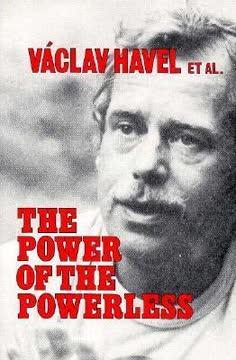
by Václav Havel
Premium summary · Opens in the app · 30 min read
In October 1978, a Czech playwright living under constant surveillance wrote an essay that would travel far beyond the borders of his small, occupied country. Václav Havel was not a politician. He was not a general. He was a writer with a typewriter, a man who had already spent years in prison for his beliefs and would spend more. From his modest circumstances, he produced one of the most penetrating analyses of power ever written.
**Author:** Václav Havel
**Estimated Reading Time:** 45 minutes
**What You'll Learn:**
* Why ordinary people sustain oppressive systems without believing in them * How a single honest act can destabilize an entire regime * What the greengrocer's slogan reveals about modern conformity * Why consumer comfort creates a subtler form of unfreedom * How parallel institutions can transform society without seizing power
**Who This Book Is For:**
This book is for anyone who has ever felt trapped by systems larger than themselves, who has wondered whether individual action matters against overwhelming force, or who senses that modern life demands quiet compromises they never consciously agreed to make. It is for readers who want to understand how power actually operates in advanced societies and how authentic living can become a political act.
In October 1978, a Czech playwright living under constant surveillance wrote an essay that would travel far beyond the borders of his small, occupied country. Václav Havel was not a politician. He was not a general. He was a writer with a typewriter, a man who had already spent years in prison for his beliefs and would spend more. From his modest circumstances, he produced one of the most penetrating analyses of power ever written. The essay began with a simple image: a greengrocer placing a sign in his shop window. The sign read "Workers of the World, Unite!" The greengrocer did not believe the slogan. He did not think about it. He placed it there because everyone placed it there, because the sign had arrived from headquarters along with the vegetables, because not displaying it would invite trouble. This small, almost invisible act of compliance became Havel's doorway into understanding an entire system of domination. Havel was writing about Czechoslovakia in the 1970s, a country living under what he called a post-totalitarian system. The Soviet invasion of 1968 had crushed the Prague Spring, a hopeful experiment in democratic socialism. In the decade that followed, the regime consolidated power not through mass terror but through something more insidious: the quiet participation of nearly everyone in rituals nobody believed. The problem Havel identified was not simply that a dictatorship existed. The deeper problem was that ordinary people sustained it through their daily choices. The greengrocer was not a villain. He was a man who wanted to be left in peace, to run his shop, to provide for his family. Yet his small act of compliance, multiplied millions of times, created the very system that constrained him. This insight gives the essay its title. The power of the powerless is not a paradox. It is a recognition that systems built on universal conformity are vulnerable to even a single act of…
Continue reading in the MinuteRead app
Get the complete 30-minute summary of The Power of the Powerless
Get the complete summary in the appThe greengrocer's sign is about compliance, not belief. Its real message is: I am obedient, therefore I have the right t
Ideology functions as an alibi. It offers dignified language for undignified behavior.
The line between oppressor and victim runs through each person. Everyone is complicit. Everyone is enslaved.
A single authentic act threatens a system built on universal lies. The power of the powerless is the power to reveal tru
Dissent begins with honest work. The brewery manager who wanted to make good beer became a political saboteur.
Political change starts in the cultural realm. The Plastic People of the Universe sparked Charter 77.
"The Power of the Powerless" is a strong fit if you want practical ideas around politics, philosophy, history, especially themes like the greengrocer's sign is about compliance, not belief. its real message is: i am obedient, therefore i have the right t; ideology functions as an alibi. it offers dignified language for undignified behavior. The MinuteRead summary distills these concepts into a focused read, whether you're deciding whether to buy the book or applying its lessons at work.
瓦茨拉夫·哈维尔 是捷克的一位剧作家、散文家和政治家,他成为了反对共产统治的著名异见人士。1989年,他领导了天鹅绒革命,和平推翻了政权,并担任了捷克斯洛伐克的最后一任总统和捷克共和国的首任总统。哈维尔的著作集中于人权和政治改革,赢得了国际赞誉和众多奖项。他参与了《七七宪章》这一人权宣言,虽然因此被监禁,但也确立了他作为反对派领袖的地位。离任后,哈维尔继续在全球范围内倡导民主和人权。
View all summaries by Václav HavelContinue Reading
Access the complete 30-minute summary and thousands more nonfiction books in the MinuteRead app.

Continue reading the complete summary in the MinuteRead app.