MinuteRead
30 min
Book summary
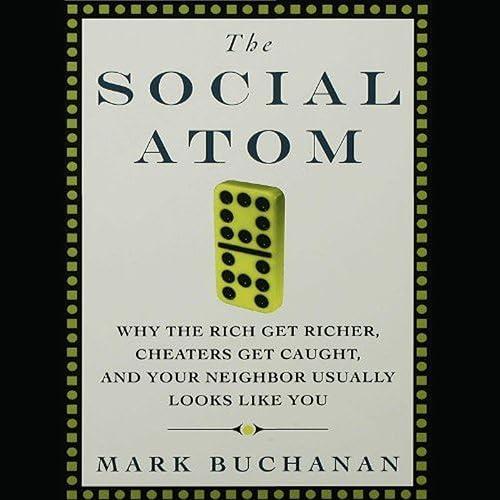
by Mark Buchanan
Premium summary · Opens in the app · 30 min read
In the summer of 1999, a man named Thomas Schelling stood before an audience of economists and posed a question that seemed almost absurdly simple. Imagine a checkerboard, he said. Now imagine that two kinds of people, let us call them reds and blues, occupy the squares. Each person is perfectly happy living next to someone of a different color. They are not racists. They do not dislike the other group. They simply prefer not to be in an extreme minority. Specifically, they would rather not live
**Author:** Mark Buchanan **Estimated Reading Time:** 42 minutes
**What You'll Learn**
Why riots erupt without organizers, how segregation persists even when almost no one wants it, why financial crashes happen far more often than experts predict, and what physics can teach us about the hidden patterns that shape human society.
**Who This Book Is For**
Anyone who has ever wondered why smart people make foolish decisions in groups, why well-intentioned policies backfire, or how individual choices create collective outcomes that no one intended. This book is for readers who want to understand the invisible forces that govern markets, crowds, communities, and cultures.
In the summer of 1999, a man named Thomas Schelling stood before an audience of economists and posed a question that seemed almost absurdly simple. Imagine a checkerboard, he said. Now imagine that two kinds of people, let us call them reds and blues, occupy the squares. Each person is perfectly happy living next to someone of a different color. They are not racists. They do not dislike the other group. They simply prefer not to be in an extreme minority. Specifically, they would rather not live in a neighborhood where more than seventy percent of their immediate neighbors belong to the other group. What happens when you run this simulation? The answer stunned the audience. Complete segregation. Every single time. The reds cluster together. The blues cluster together. Not because anyone demanded it. Not because anyone harbored animosity. The pattern emerged from nothing more than a mild, almost universal preference to avoid being outnumbered. Individual tolerance produced collective intolerance. This is the puzzle at the heart of Mark Buchanan's The Social Atom. We live in a world of patterns that no one designed. Riots explode without leaders. Stock markets crash without external shocks. Fashion trends sweep through populations like epidemics. Birthrates plummet in regions where no government program demanded it. Segregation persists in societies where surveys show declining racial prejudice. Something is happening beneath the surface of individual human intention, something that shapes our collective behavior in ways we barely understand. The problem is that we are trapped in what Buchanan calls the fallacy of individualism. When we see a social pattern, we instinctively attribute it to the character of the individuals involved. If a neighborhood is segregated, we assume the residents are racist. If a market crashes, we assume traders were greedy or foolish. If a riot breaks out, we assume the rioters were angry and violent. This way of thinking feels natural, but it is profoundly misleading. Buchanan argues that we need a new way of seeing. He draws on physics, the science that has spent centuries learning how simple particles interact to create complex…
Continue reading in the MinuteRead app
Get the complete 30-minute summary of The Social Atom
Get the complete summary in the appSocial patterns emerge from interactions, not from individual dispositions.
Segregation can persist even when no one wants it.
Order can emerge without a designer.
Humans are adaptive pattern recognizers, not rational calculators.
Financial markets exhibit fat-tailed volatility.
Imitation drives social cascades.
"The Social Atom" is a strong fit if you want practical ideas around sociology, science, psychology, especially themes like social patterns emerge from interactions, not from individual dispositions; segregation can persist even when no one wants it. The MinuteRead summary distills these concepts into a focused read, whether you're deciding whether to buy the book or applying its lessons at work.
Motivated to help readers with the central idea of this book is that the only way to understand a sudden explosion of ethnic nationalism, Mark Buchanan wrote “The Social Atom” to package those ideas for a fast, focused read. In “The Social Atom”, Mark Buchanan focuses on the central idea of this book is that the only way to understand a sudden explosion of ethnic nationalism. Through “The Social Atom”, Mark Buchanan distills the core ideas on sociology into lessons readers can absorb in a single…
Continue Reading
Access the complete 30-minute summary and thousands more nonfiction books in the MinuteRead app.

Continue reading the complete summary in the MinuteRead app.