MinuteRead
30 min
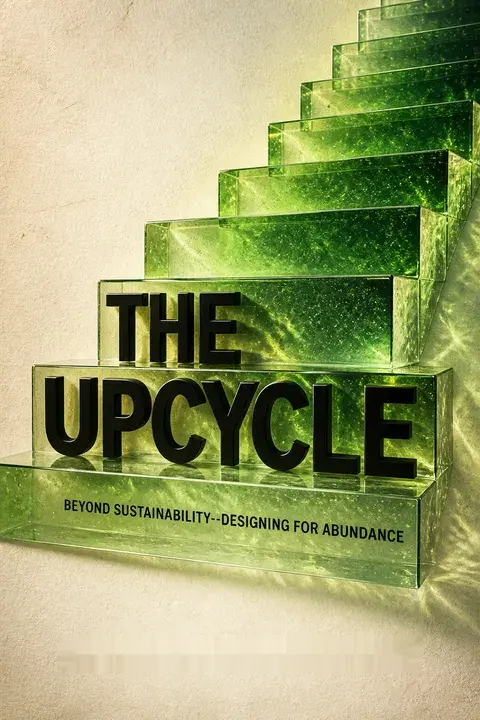
For decades, the environmental movement has operated from a single underlying assumption: human activity is fundamentally destructive, and the best we can hope for is to limit the damage. We are told to reduce our footprint, minimize our impact, consume less, and feel guilty about the rest. The goal, implicit in nearly every sustainability initiative, is to become less bad.
**Author:** William McDonough
**Estimated Reading Time:** 45 minutes
**What You'll Learn:**
- Why doing "less harm" is no longer enough, and what it means to design for positive impact - How nature's cycles reveal a path to genuine abundance rather than managed scarcity - The practical framework that turns waste into food and products into nutrients - How renewable energy can solve multiple problems at once - Why businesses that embrace these principles outperform those that resist them
**Who This Book Is For:**
This book is for anyone who suspects that our current approach to environmental problems is too small, too timid, and too focused on guilt rather than possibility. It is for designers, business leaders, architects, entrepreneurs, and citizens who want to move beyond minimizing damage and toward creating systems that actively improve the world. If you have ever felt that sustainability conversations leave you feeling constrained rather than inspired, this book offers a different path.
For decades, the environmental movement has operated from a single underlying assumption: human activity is fundamentally destructive, and the best we can hope for is to limit the damage. We are told to reduce our footprint, minimize our impact, consume less, and feel guilty about the rest. The goal, implicit in nearly every sustainability initiative, is to become less bad. But imagine being told that the best possible outcome for your career is to make fewer mistakes. Imagine a doctor whose highest aspiration is to keep you from getting worse. Imagine a chef whose greatest achievement is food that does not poison you. None of these feel like visions worth pursuing. Yet this is precisely the ceiling that conventional environmentalism has placed over our collective imagination. William McDonough has spent his career challenging this ceiling. As an architect, designer, and advisor to companies and governments around the world, he has seen firsthand what happens when people shift from asking "How do we reduce our negative impact?" to asking "How do we create positive impact?" The difference is not merely semantic. It changes everything about how problems are framed, how solutions are designed, and how people feel about the work they do. The Upcycle is built on a simple observation: nature does not operate by minimizing harm. Nature operates by maximizing benefit. A cherry tree in spring produces thousands of blossoms, far more than could ever become fruit. The excess blossoms do not become waste. They fall to the ground, decompose, and nourish the soil that feeds the tree. The tree does not have a "footprint" in the sense of a negative impact. It has a positive presence. It enriches the ecosystem around it. This is the standard McDonough invites us to adopt. Not…
Continue reading in the MinuteRead app
Get the complete 30-minute summary of The Upcycle
Get the complete summary in the appThe goal is not to be less bad. It is to be actively good.
Waste equals food. Design every output to become an input for something else.
Keep biological and technical nutrients separate. Mixing them creates monstrous hybrids.
Energy is abundant. The sun provides more energy in an hour than humanity uses in a year.
Soil is a battery. Healthy soil stores carbon and nutrients. Degraded soil releases them.
Diversity provides resilience. Monocultures are vulnerable.
"The Upcycle" is a strong fit if you want practical ideas around sustainability, environment, design, especially themes like the goal is not to be less bad. it is to be actively good; waste equals food. design every output to become an input for something else. The MinuteRead summary distills these concepts into a focused read, whether you're deciding whether to buy the book or applying its lessons at work.
Motivated to help readers with 1) Embrace abundance: Nature upcycles, William McDonough wrote “The Upcycle” to package those ideas for a fast, focused read. In “The Upcycle”, William McDonough focuses on 1) Embrace abundance: Nature upcycles. Through “The Upcycle”, William McDonough distills the core ideas on sustainability into lessons readers can absorb in a single short sitting. Readers turn to this work when they want William McDonough's perspective on the subject without working through the…
View all summaries by William McDonoughContinue Reading
Access the complete 30-minute summary and thousands more nonfiction books in the MinuteRead app.

Continue reading the complete summary in the MinuteRead app.