MinuteRead
30 min
Book summary
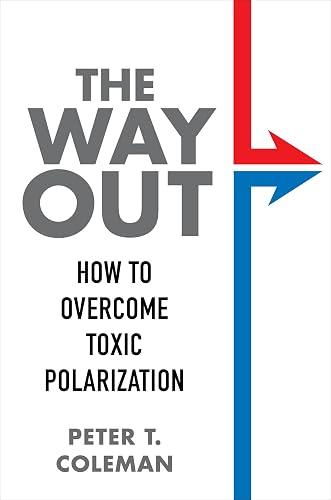
by Peter T. Coleman
Premium summary · Opens in the app · 30 min read
There is a particular kind of exhaustion that comes from living through deeply divided times. It is not just the fatigue of disagreeing with people. It is the weariness of feeling that every conversation is a potential minefield, every news headline a fresh wound, every family gathering a test of loyalties. Many Americans describe a sense of dread when politics comes up at dinner. Others have simply stopped talking to people they once loved. The division is not merely intellectual. It has become
**Author:** Peter T. Coleman
**Estimated Reading Time:** 45 minutes
**What You'll Learn:** Why political and social polarization has become so dangerously entrenched, how hidden psychological and systemic forces keep us trapped in destructive cycles, and what specific strategies can help individuals and communities find a way out.
**Who This Book Is For:** Anyone who has felt the strain of political division in their families, workplaces, or communities. Anyone who worries about the future of democratic societies. Anyone who wants to understand why people become so entrenched in opposing camps and what can actually be done about it.
There is a particular kind of exhaustion that comes from living through deeply divided times. It is not just the fatigue of disagreeing with people. It is the weariness of feeling that every conversation is a potential minefield, every news headline a fresh wound, every family gathering a test of loyalties. Many Americans describe a sense of dread when politics comes up at dinner. Others have simply stopped talking to people they once loved. The division is not merely intellectual. It has become emotional, social, and deeply personal. Peter T. Coleman has spent decades studying conflict. As a professor of psychology and education at Columbia University, he has worked on some of the most intractable disputes imaginable, from community battles over abortion to international peace negotiations. He has seen how conflicts begin, how they escalate, and how they sometimes, against all odds, find resolution. In *The Way Out*, he turns his attention to the most pressing conflict of our time: the toxic polarization that has gripped the United States and many other democracies around the world. The problem is not that people disagree. Disagreement is essential to democracy. The problem is that disagreement has curdled into contempt. Americans increasingly view those on the other side of the political divide not as fellow citizens with different opinions, but as enemies who threaten the very fabric of the nation. This shift has been building for more than fifty years, and it has accelerated dramatically in recent decades. The result is a political system paralyzed by deadlock, a public discourse poisoned by fear and anger, and a population that feels increasingly anxious, depressed, and isolated. What makes this moment particularly dangerous is that polarization is not just a political problem. It is a psychological one. It changes how people think, how they perceive reality, how they treat their neighbors. It rewires the brain to see threats everywhere and to distrust anyone who does not share the same tribal loyalties. It makes people less creative, less compassionate, and less capable of solving complex problems. And it creates a feedback loop: the more polarized we become, the more…
Continue reading in the MinuteRead app
Get the complete 30-minute summary of The Way Out
Get the complete summary in the appPolarization is not just a political problem. It is a psychological one that changes how we think and perceive reality.
Attractors are the hidden patterns that keep us trapped in destructive cycles. Changing them requires changing the lands
Resets create windows of opportunity. Major shocks can destabilize old patterns, but the way we respond determines wheth
Even in the most polarized situations, pockets of health exist. Find them and strengthen them.
Threat simplifies thinking. Complexity restores it. Deliberately complicate your understanding of conflicts.
Movement, both physical and psychological, can break the grip of conflict. Get out of your head and into the world.
"The Way Out" is a strong fit if you want practical ideas around politics, psychology, sociology, especially themes like polarization is not just a political problem. it is a psychological one that changes how we think and perceive reality; attractors are the hidden patterns that keep us trapped in destructive cycles. changing them requires changing the lands. The MinuteRead summary distills these concepts into a focused read, whether you're deciding whether to buy the book or applying its lessons at work.
Motivated to help readers with coleman lays out a new perspective regarding the roots of this hyperpolarization in a lively, Peter T. Coleman wrote “The Way Out” to package those ideas for a fast, focused read. In “The Way Out”, Peter T. Coleman focuses on coleman lays out a new perspective regarding the roots of this hyperpolarization in a lively. Through “The Way Out”, Peter T. Coleman distills the core ideas on politics into lessons readers can absorb in a single short sitting. Readers turn t…
Continue Reading
Access the complete 30-minute summary and thousands more nonfiction books in the MinuteRead app.

Continue reading the complete summary in the MinuteRead app.