MinuteRead
30 min
Book summary
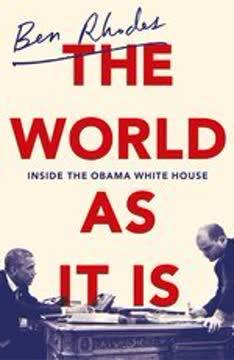
by Ben Rhodes
Premium summary · Opens in the app · 30 min read
Most books about the White House are written from a distance. They are assembled from press briefings, leaked memos, and interviews conducted long after the principals have moved on. They describe decisions as if they were made in calm rooms by people who knew exactly what they were doing. They leave out the exhaustion, the doubt, the arguments that went nowhere, and the moments when the most powerful people on earth had no idea what would happen next.
**Author:** Ben Rhodes **Estimated Reading Time:** 4 hours **What You'll Learn:** How a young speechwriter became one of President Obama's closest foreign policy advisors, the hidden stories behind the administration's most consequential decisions, and what it truly feels like to carry the weight of presidential power in an era of endless war, rising disinformation, and fractured politics. **Who This Book Is For:** Anyone seeking to understand how American foreign policy is actually made, readers curious about the human beings behind the headlines, and those who want an honest account of what happens when idealism collides with the brutal realities of governing.
Most books about the White House are written from a distance. They are assembled from press briefings, leaked memos, and interviews conducted long after the principals have moved on. They describe decisions as if they were made in calm rooms by people who knew exactly what they were doing. They leave out the exhaustion, the doubt, the arguments that went nowhere, and the moments when the most powerful people on earth had no idea what would happen next. This book is different. Ben Rhodes spent ten years at Barack Obama's side. He joined the campaign in 2007 as a twenty-nine-year-old speechwriter struggling to capture a candidate's voice. He left the White House in 2017 as deputy national security advisor, having shaped some of the most consequential foreign policy decisions of the early twenty-first century. Along the way, he wrote speeches that defined a presidency, negotiated secret talks with Iran and Cuba, and watched the hopeful narrative of the Obama years collide with the chaos of the Arab Spring, the brutality of Syria, the rise of ISIS, and the emergence of a new kind of information warfare that would eventually help put Donald Trump in the Oval Office. The book exists because the story Rhodes lived is not the story most Americans heard. The Obama administration operated in an era of collapsing trust. Traditional media was shrinking. Social media was fragmenting public attention. Foreign governments were learning to weaponize disinformation. And the White House itself, Rhodes admits, sometimes contributed to the problem by trying to control narratives too tightly, by creating what he calls an "echo chamber" that could amplify a message but also insulate its creators from inconvenient truths. The problem the book addresses is straightforward but profound: How do you govern when the world refuses to cooperate with your vision of it? Obama campaigned on ending wars, closing Guantanamo, restoring America's moral standing, and proving that diplomacy could solve problems that military force could not. He achieved more than his critics acknowledge. The Iran nuclear deal prevented a path to an Iranian bomb without firing a shot. Relations…
Continue reading in the MinuteRead app
Get the complete 30-minute summary of The World As It Is
Get the complete summary in the appThe world as it is resists our stories. Learn to hold your narratives lightly and test them against evidence.
Narrative is power. It can be used for good or ill, but it is never neutral.
Ending wars is harder than starting them. The institutional and political forces that sustain military action are powerf
Diplomacy can achieve what military force cannot, but diplomatic achievements are politically fragile.
Interventions are inherently unpredictable. The burden of proof should always be high.
Disinformation is a structural threat to democracy. Truth requires active defense.
"The World As It Is" is a strong fit if you want practical ideas around politics, memoir, history, especially themes like the world as it is resists our stories. learn to hold your narratives lightly and test them against evidence; narrative is power. it can be used for good or ill, but it is never neutral. The MinuteRead summary distills these concepts into a focused read, whether you're deciding whether to buy the book or applying its lessons at work.
Ben Rhodes served as deputy national security advisor to President Barack Obama from 2009 to 2017, overseeing communications, speechwriting, and global engagement. He joined Obama's campaign in 2007 as a senior speechwriter and foreign policy advisor. Previously, Rhodes worked for congressman Lee Hamilton and co-authored a book on the 9/11 Commission. A New York native, he holds a BA from Rice University and an MFA from New York University. Rhodes' role in the White House involved crafting speec…
View all summaries by Ben RhodesContinue Reading
Access the complete 30-minute summary and thousands more nonfiction books in the MinuteRead app.

Continue reading the complete summary in the MinuteRead app.