MinuteRead
30 min
Book summary
Premium summary · Opens in the app · 30 min read
Most organizations do not think about their services. They think about their products, their processes, their departments, their quarterly targets. The service itself, the actual experience a customer has when interacting with the organization, is usually nobody's job. It emerges accidentally from the collision of marketing promises, operational constraints, employee behavior, and customer expectations. The result is predictable: services that frustrate, confuse, and disappoint.
**Author:** Marc Stickdorn
**Estimated Reading Time:** 45 minutes
**What You'll Learn:**
- Why services fail when organizations focus on internal processes instead of customer experiences - The five core principles that separate service design from traditional approaches - A practical, iterative process for designing services that actually work - The essential tools and methods used by service design practitioners - How to prototype services before committing resources to implementation - How service design extends beyond business into social innovation and public services
**Who This Book Is For:**
This condensed edition is for anyone who has ever been frustrated by a confusing website, a bureaucratic government office, a disjointed hospital visit, or a customer service phone line that seems designed to prevent human contact. It is for managers who want to understand why their customers are leaving. It is for designers who want to move beyond screens and products into the broader world of experiences. It is for public servants who genuinely want to help citizens but feel trapped by broken systems. It is for entrepreneurs who sense that their product alone is no longer enough. If you have ever suspected that there must be a better way to design the experiences people have with organizations, this book will give you the language, the frameworks, and the tools to do something about it.
Most organizations do not think about their services. They think about their products, their processes, their departments, their quarterly targets. The service itself, the actual experience a customer has when interacting with the organization, is usually nobody's job. It emerges accidentally from the collision of marketing promises, operational constraints, employee behavior, and customer expectations. The result is predictable: services that frustrate, confuse, and disappoint. Consider a typical hospital visit. You arrive early because the appointment letter told you to. You wait forty-five minutes because the clinic is running behind. You fill out a form asking for information you already provided over the phone. You are moved from one waiting area to another. You see a doctor for seven minutes. You leave with a prescription and a vague sense that you were processed rather than cared for. Every individual step made sense to someone. The receptionist was following protocol. The doctor was managing a packed schedule. The forms satisfied legal requirements. But the experience as a whole was nobody's responsibility. This is the problem service design thinking addresses. It is not a new academic discipline with its own jargon and tenure track. It is a way of thinking, a set of principles, and a collection of practical tools drawn from design, marketing, psychology, operations management, and ethnography. It treats services as things that can be designed, tested, and improved…
Continue reading in the MinuteRead app
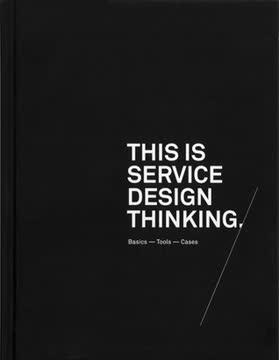
Get the complete 30-minute summary of This Is Service Design Thinking
Get the complete summary in the appServices should be designed from the customer's perspective, not the organization's.
The five principles of service design are user-centered, co-creative, sequencing, evidencing, and holistic.
The service design process has four phases: exploration, creation, reflection, and implementation.
Research is the foundation of good service design. Do not skip it.
Journey maps and service blueprints are essential tools for understanding and communicating services.
Co-creation involves all stakeholders in the design process and builds ownership.
"This Is Service Design Thinking" is a strong fit if you want practical ideas around design, business, professional development, especially themes like services should be designed from the customer's perspective, not the organization's; the five principles of service design are user-centered, co-creative, sequencing, evidencing, and holistic. The MinuteRead summary distills these concepts into a focused read, whether you're deciding whether to buy the book or applying its lessons at work.
Mark Stickdorn is a German author and consultant specializing in service design and customer experience. He co-authored This is Service Design Thinking , which is widely regarded as a foundational text in the field of service design. Stickdorn's work focuses on bridging the gap between theory and practice in service design, providing professionals with practical tools and methodologies. He is known for his collaborative approach to writing, incorporating insights from various experts in the fiel…
View all summaries by Marc StickdornContinue Reading
Access the complete 30-minute summary and thousands more nonfiction books in the MinuteRead app.

Continue reading the complete summary in the MinuteRead app.