MinuteRead
30 min
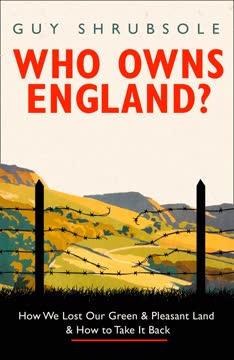
England is a nation obsessed with property. Television schedules overflow with programs about buying, renovating, and selling homes. Newspapers devote entire sections to house prices. Conversations at dinner parties inevitably drift toward the market. Yet for all this fixation, there is a profound silence at the heart of the matter. Nobody can tell you who actually owns England.
**Author: Guy Shrubsole**
**Estimated Reading Time: 48 minutes**
**What You'll Learn**
You will discover who truly owns the land beneath your feet in England. You will learn how a tiny elite has held onto vast estates for nearly a thousand years, how new global wealth is reshaping the landscape, and why the housing crisis is fundamentally a crisis of concentrated land ownership. You will also explore practical pathways toward a more transparent and equitable relationship with the land.
**Who This Book Is For**
This book is for anyone who has ever wondered why housing is so expensive, why the countryside looks the way it does, or who benefits from the land we all live on. It is for the curious citizen, the frustrated renter, the aspiring farmer, and anyone who suspects that the game is rigged but cannot quite see how.
England is a nation obsessed with property. Television schedules overflow with programs about buying, renovating, and selling homes. Newspapers devote entire sections to house prices. Conversations at dinner parties inevitably drift toward the market. Yet for all this fixation, there is a profound silence at the heart of the matter. Nobody can tell you who actually owns England. This silence is not accidental. It is the product of centuries of deliberate obfuscation, legal complexity, and political choice. Land ownership remains, as Guy Shrubsole puts it, our oldest, darkest, best-kept secret. The question seems simple enough. Walk out your front door, look at the fields, the hills, the city streets, the parks, the empty lots, and ask: whose is this? The answer, it turns out, is extraordinarily difficult to obtain. The problem begins with a basic failure of record-keeping. Unlike many developed nations, England lacks a complete, publicly accessible register of land ownership. The Land Registry, established in 1862, still has not mapped roughly 17 percent of the country. For the land that is registered, ownership details often disappear into a labyrinth of offshore companies, trusts, and shell corporations designed to conceal the true beneficiaries. When researchers try to piece together the puzzle, they hit walls of privacy protections that seem to serve only those with something to hide. What we do know is startling. Less than one percent of the population owns more than half of England. This concentration of ownership has no parallel in other essential resources. Imagine if one percent of the population controlled half the water, or half the air. There would be outrage. Yet with land, we accept it as the natural order of things. The roots of this inequality stretch back to 1066, when William the Conqueror claimed all of England as his personal possession and distributed it among a small circle of loyal…
Continue reading in the MinuteRead app
Get the complete 30-minute summary of Who Owns England?
Get the complete summary in the appLess than one percent of England's population owns more than half the land.
The Land Registry is incomplete, and offshore companies are used to hide true ownership.
The monarchy and the Church of England control over half a million acres between them.
Aristocratic families have maintained their estates for centuries through primogeniture, trusts, and tax avoidance.
The housing crisis is driven by land values, not construction costs.
Agricultural subsidies flow disproportionately to the largest landowners.
"Who Owns England?" is a strong fit if you want practical ideas around politics, history, environment, especially themes like less than one percent of england's population owns more than half the land; the land registry is incomplete, and offshore companies are used to hide true ownership. The MinuteRead summary distills these concepts into a focused read, whether you're deciding whether to buy the book or applying its lessons at work.
Guy Shrubsole is an environmental campaigner and writer based in the UK. He works as a campaigner for Friends of the Earth, focusing on issues related to land use, climate change, and social justice. Shrubsole has written for various publications including The Guardian and New Statesman. "Who Owns England?" is his first book, which grew out of his blog of the same name where he began investigating land ownership patterns in England. His work combines data analysis, historical research, and on-th…
View all summaries by Guy ShrubsoleContinue Reading
Access the complete 30-minute summary and thousands more nonfiction books in the MinuteRead app.

Continue reading the complete summary in the MinuteRead app.