MinuteRead
30 min
Every society, in every era, has been forced to answer a question that seems simple but proves endlessly complex: how should peoples and nations relate to one another? What arrangements prevent endless war? What principles make peace durable? What happens when different civilizations answer these questions in fundamentally incompatible ways?
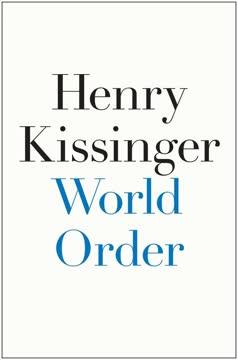
**Author:** Henry Kissinger **Estimated Reading Time:** 4 hours **What You'll Learn:** How different civilizations have understood order throughout history, why the modern state system emerged from Europe's chaos, and what principles must guide nations through an era of unprecedented global transformation. **Who This Book Is For:** Anyone who wants to understand why nations behave as they do, why some regions remain trapped in perpetual conflict, and what it will take to build a stable international system in a world where power is shifting and old certainties are dissolving.
Every society, in every era, has been forced to answer a question that seems simple but proves endlessly complex: how should peoples and nations relate to one another? What arrangements prevent endless war? What principles make peace durable? What happens when different civilizations answer these questions in fundamentally incompatible ways? Henry Kissinger has spent his life at the intersection of ideas and power. As a scholar, he studied the diplomatic systems that European statesmen constructed after centuries of religious warfare. As Secretary of State, he negotiated with Soviet leaders, opened relations with China, and worked to extricate America from Vietnam. Few people have thought as deeply about the architecture of international order while simultaneously bearing responsibility for maintaining it. The book you are about to read is not a memoir, though it draws on decades of direct experience. It is not a history, though it ranges across centuries and continents. It is an examination of the deepest structures that shape global politics: the assumptions different civilizations make about legitimacy, the mechanisms they develop to restrain violence, and the consequences when these systems collide. Kissinger begins with a striking observation. No truly global world order has ever existed. What we call international order is actually a patchwork of regional systems, each with its own logic, its own history, and its own understanding of how power should be organized. The modern state system, with its emphasis on sovereignty and balance of power, emerged from a specific European experience. It was not designed by committee. It was forged in the aftermath of devastating religious wars that convinced European leaders they needed new principles to prevent mutual destruction. This European system eventually spread worldwide through colonization, commerce, and cultural influence. But its global reach never produced genuine global consensus. Other civilizations accepted the forms of the Westphalian system while retaining older visions of world order rooted in their own traditions. China still thinks in terms of a hierarchical universe centered on the Middle Kingdom. Islam retains the concept of a universal community of believers that transcends state boundaries. America oscillates between crusading idealism and isolationist withdrawal. The result is a world that shares institutions but not…
Continue reading in the MinuteRead app
Get the complete 30-minute summary of World Order
Get the complete summary in the appNo truly global world order has ever existed. What we call international order is a patchwork of regional systems with d
The modern state system was invented in Europe after the Thirty Years' War. Its key principles are sovereignty, non-inte
Order requires both power and legitimacy. Power without legitimacy produces resistance. Legitimacy without power produce
The balance of power is not automatic. It requires statesmen who understand its logic and are willing to exercise restra
America's foreign policy oscillates between idealism and realism. Neither can be abandoned without cost. The challenge i
Asia's rising powers bring their own conceptions of order, which differ fundamentally from the Western model. Modernizat
"World Order" is a strong fit if you want practical ideas around politics, history, international relations, especially themes like no truly global world order has ever existed. what we call international order is a patchwork of regional systems with d; the modern state system was invented in europe after the thirty years' war. its key principles are sovereignty, non-inte. The MinuteRead summary distills these concepts into a focused read, whether you're deciding whether to buy the book or applying its lessons at work.
Henry Alfred Kissinger , born Heinz Alfred Kissinger in Germany, is a prominent American diplomat and political scientist. He served as National Security Advisor and Secretary of State under Presidents Nixon and Ford. Kissinger played a crucial role in shaping U.S. foreign policy during the Cold War, pioneering the policy of détente with the Soviet Union and opening relations with China. He was awarded the Nobel Peace Prize in 1973. Known for his Realpolitik approach, Kissinger's influence on Am…
View all summaries by Henry KissingerContinue Reading
Access the complete 30-minute summary and thousands more nonfiction books in the MinuteRead app.

Continue reading the complete summary in the MinuteRead app.