MinuteRead
30 min
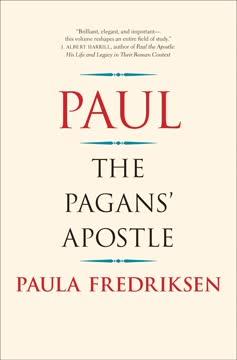
Paul of Tarsus is arguably the most influential figure in Western history after Jesus himself. His letters form the earliest surviving Christian documents, predating the gospels by decades. His ideas about grace, faith, and the relationship between Jews and gentiles shaped the theological trajectory of Christianity for two thousand years.
### The Apostle to the Pagans in History's Final Hour
**Author:** Paula Fredriksen **Estimated Reading Time:** 45 minutes
**What You'll Learn:** Why the apostle Paul must be understood within his first-century Jewish apocalyptic worldview, how his letters were written exclusively to former pagans, and what this means for interpreting everything he says about the Law, circumcision, Israel, and the coming Kingdom of God.
**Who This Book Is For:** Anyone who has ever found Paul confusing, contradictory, or troubling. Readers who sense that later Christian theology may have distorted his message. Students of history who want to meet the real Paul, a first-century Jew convinced he was living in the final days before cosmic transformation.
Paul of Tarsus is arguably the most influential figure in Western history after Jesus himself. His letters form the earliest surviving Christian documents, predating the gospels by decades. His ideas about grace, faith, and the relationship between Jews and gentiles shaped the theological trajectory of Christianity for two thousand years. And yet, most people have never actually read Paul. They have read Paul through the lens of Augustine, through the lens of Luther, through the lens of modern Protestant or Catholic theology. They have encountered a Paul who seems to reject Judaism, who condemns the Law, who invents a new religion called Christianity. This Paul is a familiar figure. He is also a historical impossibility. Paula Fredriksen, one of the world's foremost scholars of ancient Judaism and early Christianity, offers a radically different portrait. Her Paul is not a Christian theologian writing systematic doctrine for the ages. He is a first-century Jewish apocalypticist, convinced beyond doubt that he is living in the final moments of human history. The resurrection of Jesus has already occurred. The general resurrection of the dead will follow soon. The Kingdom of God is about to arrive. There is no time to waste. This urgency explains everything about Paul's mission. He travels relentlessly across the Mediterranean world, establishing small communities of believers in city after city. He writes letters filled with passionate argument, emotional appeals, and occasional fury. He demands that his gentile converts abandon their ancestral gods completely and worship only the god of Israel. He insists that the cosmic clock is ticking. But here is the crucial insight that Fredriksen brings to the surface: Paul's letters are addressed exclusively to gentiles. Former pagans. People who grew up worshipping multiple gods, who participated in the civic cults of their cities, who honored the traditional deities of their families and communities. Paul's entire mission was to these people, not to Jews. His arguments about the Law, about circumcision, about Israel's destiny, all make sense only when we understand this specific audience. When…
Continue reading in the MinuteRead app
Get the complete 30-minute summary of Paul
Get the complete summary in the appPaul was a first-century Jew convinced he was living in history's final hour. Everything he wrote was shaped by this con
Paul wrote exclusively to gentiles, former pagans who had turned to the god of Israel. His arguments about the Law and c
Paul's core demand was exclusive worship of Israel's god. His converts had to abandon all other gods completely.
Paul maintained ethnic distinctions between Jews and gentiles. He opposed gentile circumcision to preserve these distinc
Paul's negative statements about the Law refer to gentile attempts to adopt Jewish practices. He never told Jews to stop
Paul believed all Israel would be saved. The gentile mission served Israel's redemption, not its replacement.
"Paul" is a strong fit if you want practical ideas around religion, history, christianity, especially themes like paul was a first-century jew convinced he was living in history's final hour. everything he wrote was shaped by this con; paul wrote exclusively to gentiles, former pagans who had turned to the god of israel. his arguments about the law and c. The MinuteRead summary distills these concepts into a focused read, whether you're deciding whether to buy the book or applying its lessons at work.
Paula Fredriksen is a distinguished scholar of ancient Christianity and Jewish-Christian-pagan relations in the Roman Empire. She holds the position of Aurelio Professor of Scripture emerita at Boston University and is a Distinguished Visiting Professor at the Hebrew University, Jerusalem. Fredriksen has authored numerous influential works, including "Jesus of Nazareth, King of the Jews," which won a National Jewish Book Award. Her research spans topics such as the development of Christian anti-…
View all summaries by Paula FredriksenContinue Reading
Access the complete 30-minute summary and thousands more nonfiction books in the MinuteRead app.

Continue reading the complete summary in the MinuteRead app.