MinuteRead
30 min
Book summary
Premium summary · Opens in the app · 30 min read
Most people who appeal to the Bible for moral guidance do so selectively. They quote verses that support their positions and ignore verses that complicate them. They treat the Bible as a repository of timeless principles while overlooking the historical distance between ancient texts and modern life. This selective reading is not always dishonest. Often it reflects genuine ignorance of what the Bible actually contains.
**Author:** John J. Collins **Estimated Reading Time:** 55 minutes
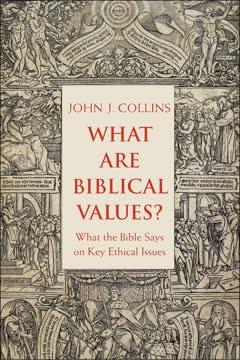
The Bible is often invoked as a source of moral authority, yet few people grapple honestly with what it actually says. This book examines the ethical content of Scripture without the filters of tradition, wishful thinking, or political convenience. You will encounter the Bible's own internal debates about violence, justice, gender, slavery, sexuality, and the value of human life. You will discover that the Bible does not speak with one voice on most ethical questions, and that responsible engagement requires interpretation, humility, and moral judgment.
This book is for anyone who has ever wondered what the Bible really says about the moral questions that divide us. It is for believers who want to take Scripture seriously rather than selectively. It is for skeptics who want to understand why biblical ethics remain so influential. And it is for anyone caught between those who claim the Bible provides clear answers and those who dismiss it entirely. If you are willing to sit with complexity rather than reach for easy conclusions, this book will reward your attention.
Most people who appeal to the Bible for moral guidance do so selectively. They quote verses that support their positions and ignore verses that complicate them. They treat the Bible as a repository of timeless principles while overlooking the historical distance between ancient texts and modern life. This selective reading is not always dishonest. Often it reflects genuine ignorance of what the Bible actually contains. John J. Collins wrote this book to address that ignorance. As a scholar who has spent decades studying both the Hebrew Bible and the New Testament in their historical contexts, he brings a rare combination of expertise and accessibility to the task. He does not set out to attack the Bible or to defend it. He sets out to read it carefully and to ask what values it actually expresses. The results are unsettling for anyone who expects the Bible to provide a unified ethical system. The Bible contains laws that command the death penalty for Sabbath-breaking and adultery. It contains stories of divinely sanctioned genocide. It accepts slavery as a normal social institution. It also contains some of the most powerful calls for justice, mercy, and care for the vulnerable ever written. It portrays a God who demands compassion for the stranger and who commands the slaughter of entire populations. These tensions are not incidental. They are woven into the fabric of Scripture itself. Collins argues that these tensions are not problems to be solved but features to be understood. The Bible was written over many centuries by authors who lived in different historical circumstances and who held different theological perspectives.…
Continue reading in the MinuteRead app
Get the complete 30-minute summary of What Are Biblical Values?
Get the complete summary in the appThe Bible is a library of diverse texts, not a unified rulebook. It contains multiple voices that often disagree.
Social justice is the central ethical demand of the Hebrew Bible. The prophets condemn economic exploitation as a primar
The Bible never condemns slavery as an institution. It regulates the practice but accepts it as a normal part of the soc
The New Testament's ethical teachings are shaped by the expectation that the world was about to end. This apocalyptic co
The Bible contains extensive violence attributed to God. These texts stand in tension with biblical visions of peace and
The Bible does not have a single position on gender and sexuality. It contains diverse and sometimes conflicting perspec
"What Are Biblical Values?" is a strong fit if you want practical ideas around religion, christian, theology, especially themes like the bible is a library of diverse texts, not a unified rulebook. it contains multiple voices that often disagree; social justice is the central ethical demand of the hebrew bible. the prophets condemn economic exploitation as a primar. The MinuteRead summary distills these concepts into a focused read, whether you're deciding whether to buy the book or applying its lessons at work.
John J. Collins is a respected biblical scholar known for his thorough research and balanced approach to critical biblical study. He has authored numerous books on biblical topics, demonstrating expertise in both Hebrew and Christian scriptures. Collins is recognized for his ability to present complex theological concepts in an accessible manner, making his work valuable for both scholars and general readers. His writing style is described as respectful yet provocative, encouraging readers to co…
View all summaries by John J. CollinsContinue Reading
Access the complete 30-minute summary and thousands more nonfiction books in the MinuteRead app.

Continue reading the complete summary in the MinuteRead app.